

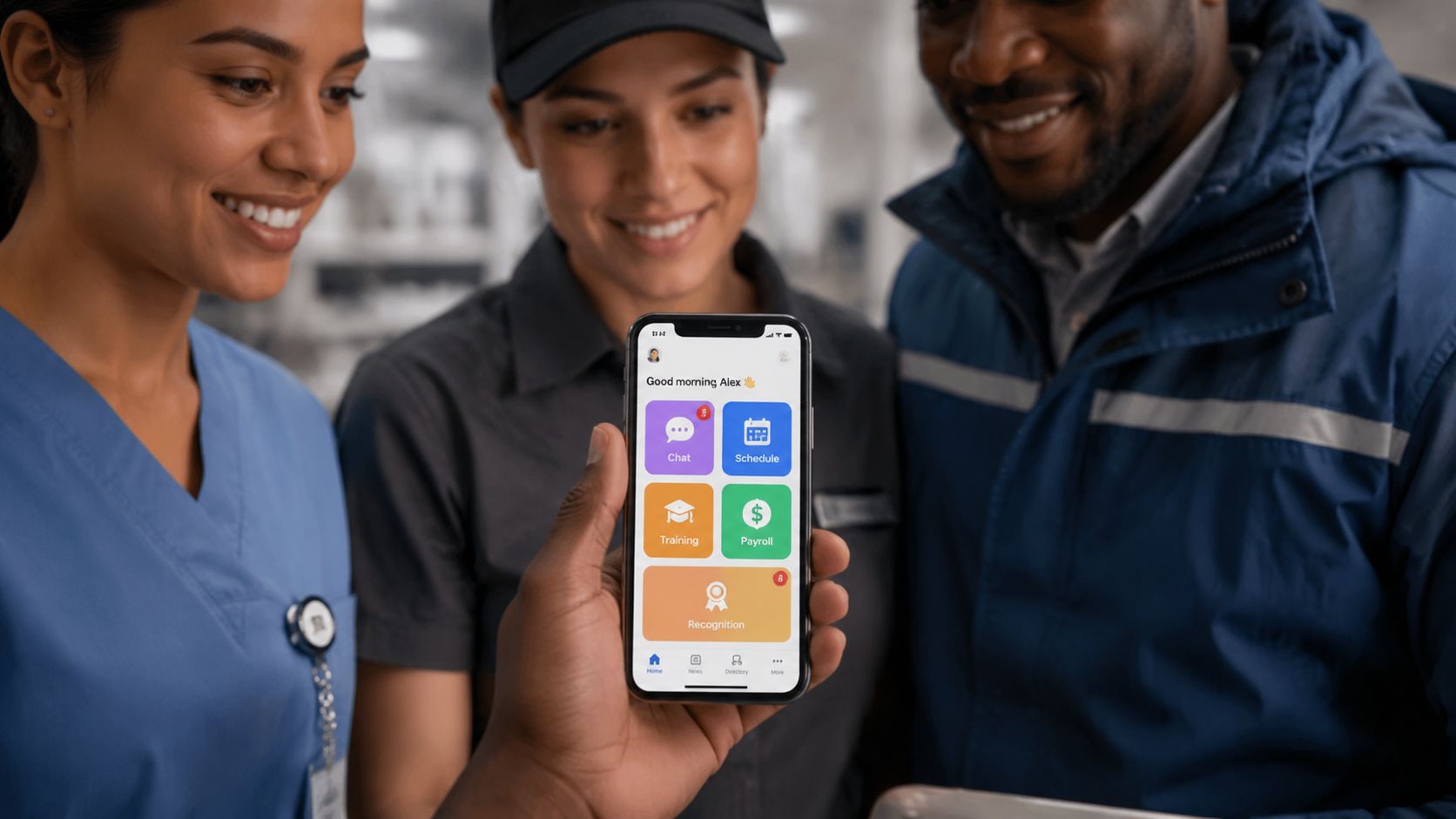
The Frontline Superapp: Why Deskless Work Needs One Place to Communicate, Learn, and Execute
Frontline workers do not need more apps. They need fewer handoffs, fewer logins, and fewer places where a shift can break down. A frontline superapp is a mobile-first workspace that…


The Autonomous Workplace: What Happens When Workflows Start Managing Themselves?
An employee asks a benefits question. An AI agent checks the approved policy, confirms the employee’s location, gives the correct answer, starts the required form, alerts the manager, and schedules…

The Work Graph: How Companies Can Map People, Skills, Tasks, Knowledge, and Communication
The schedule says the team is fully staffed. The training system shows that every employee completed the required course. The updated procedure is available somewhere on the company intranet. Yet…

The Workforce Operating System: Why the Future of Work Needs a New Control Layer
The surprising truth is that most companies don’t need another employee app, they need a control layer. The stack is already crowded with tools for communication, engagement, tasks, schedules, knowledge,…

How to Build a Better Employee Onboarding Experience for Frontline and Distributed Teams
Strong onboarding changes retention economics fast. Organizations with strong employee onboarding processes achieve a new hire retention rate that is 82% higher than their peers, while 20% of employees quit…

Internal Communications Trends in 2026: AI, Trust, Measurement, and Employee Experience
Internal communications software adoption is rising, but the bigger shift is operational. Communication now has to reach people in different conditions, across remote teams, hybrid offices, plants, clinics, stores, and…

How to Build an Internal Communication Strategy for a Distributed Workforce
You’ve probably felt this already. The company grew fast, teams spread across time zones, managers started relaying updates in their own words, frontline employees missed messages that office staff saw…
What Is a Workforce Experience Platform? Features, Benefits, and Examples
Large markets rarely form around category hype alone. They form because enterprises have a persistent operating problem, and workforce experience has become one. For many organizations, that problem is fragmentation…