When we talk about making work better, the conversation often gets stuck on feelings, engagement surveys, office perks, and company culture. But what about the work itself? That’s the crucial gap that Workforce Experience is designed to fill.
When those systems (tools, processes, and comms) live in one place, teams often evaluate a unified employee experience platform as the layer that keeps frontline and desk-based employees on the same facts.
It’s the total reality of an employee’s day, moving beyond just their feelings to include the tools, processes, and operational realities that dictate how effectively they can do their jobs. In a world of distributed teams, AI adoption, and constant labor challenges, focusing on the systems that enable, or hinder, your people is no longer optional. It’s a business imperative.
Key Takeaways
- Beyond Employee Experience: Workforce Experience (WX) is not just another name for Employee Experience (EX). While EX focuses on culture and feelings, WX is the operational reality of work, the tools, processes, data, and communications that determine an employee’s effectiveness.
- A System, Not a Silo: A strong Workforce Experience is the intersection of internal communications, HR technology, AI, frontline enablement, and workforce operations. It requires cross-functional collaboration between HR, IT, and Operations.
- Operational Focus is Key: A great WX makes work easier. This means reducing friction caused by clunky HR tech, poor communication, or inefficient operational workflows.
- Modern Work Demands It: Distributed teams, tool sprawl, AI integration, and frontline labor shortages have made WX a critical focus for business resilience and productivity.
- Drives Business Value: Improving the Workforce Experience directly impacts key business metrics like employee retention, time-to-productivity, operational efficiency, and safety, delivering a measurable return on investment.
Defining Workforce Experience Beyond the Buzzwords
For years, leaders have focused on Employee Experience (EX), which is vital. But it’s only half the story. To truly build a high-performing organization, you must understand that Workforce Experience (WX) is the full system of communication, engagement, tools, operations, learning, and feedback that shapes how employees experience work.
Think of it like a hotel. Employee Experience is the brand promise, the friendly check-in, the stylish lobby, the welcoming vibe. It’s about the feeling you get. But Workforce Experience is the entire stay. Did the key card actually work? Was the Wi-Fi fast enough for your video call? How quickly did maintenance fix the leaky faucet in your room?
It’s this operational reality, the intersection of HR, IT, and day-to-day operations, that truly defines the employee’s ability to be effective.
This is where most companies fall short. A staggering 80% of employees report a major gap between the experience their company promises and the one they actually live every day, according to recent employee experience research. This isn’t just about morale; it’s a massive drain on the bottom line, contributing to an estimated $8.8 trillion in lost productivity worldwide.
Closing that gap is no longer a “nice-to-have.” It’s an economic imperative. True Workforce Experience isn’t just another buzzword; it’s a practical framework for seeing, and fixing, the systems that either empower your people or get in their way.
At Turn On Work, we’re dedicated to helping companies bridge this divide between promise and reality. It’s the core of everything we do, and you can learn more about our story and our mission to improve the daily grind for everyone.
Understanding the Core Components of a Workforce Experience
A truly great Workforce Experience isn’t an accident. It’s the direct result of several key business functions, which traditionally operate in their own silos, finally coming together and working in concert. Instead of seeing these as separate departments, a modern strategy views them as interconnected parts of a single system that dictates how productive and connected your people feel.
Think about it from an employee’s perspective. Their daily experience isn’t defined by just one thing. It’s a blend of the communications they receive, the technology they use, how their work is operationally managed, and whether they feel valued. If any one of these elements is broken, the entire experience suffers.
The diagram below helps visualize how these distinct areas combine to create a holistic ecosystem for your workforce.
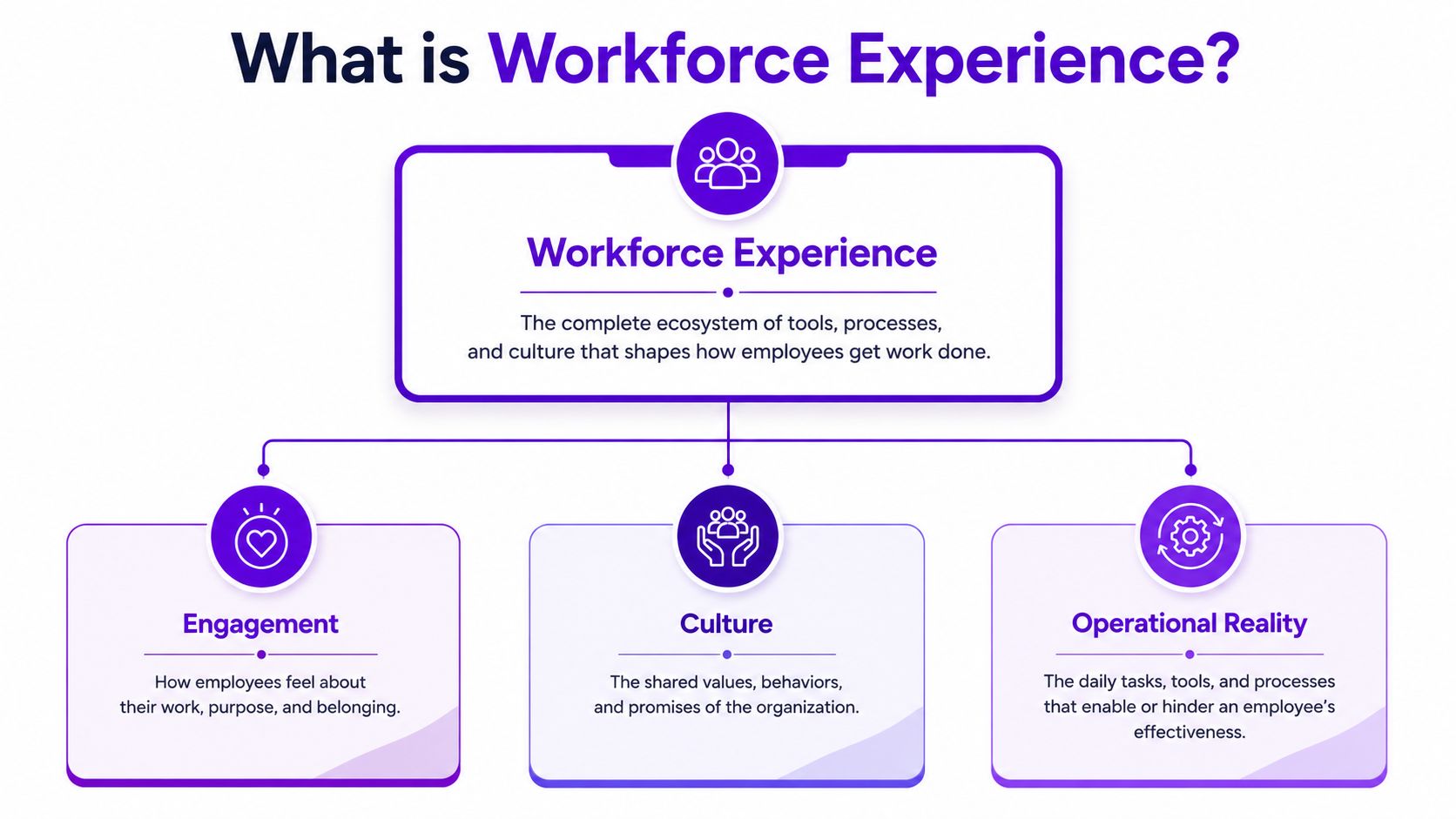
As you can see, Workforce Experience goes far beyond just feelings and “engagement.” It’s deeply rooted in the practical, day-to-day operational reality of getting work done.
The Five Pillars of a Strong Workforce Experience
To build this ecosystem, leaders need to focus on integrating five key pillars that directly shape an employee’s daily life at work.
-
Internal Communications: This is about delivering the right information to the right person at the right time. It’s not about another generic corporate newsletter. Practical Example: For a retail associate, effective communication means getting a mobile alert about a product recall instantly, not having to search through irrelevant emails.
-
HR Technology: Your tech stack should make work easier, not harder. Does an employee have to navigate a confusing HR portal with ten different logins just to check their schedule or request time off? Or can they do it all in a single, intuitive app? The goal is to reduce friction, not add to it.
-
Employee Engagement: While company-sponsored social events have their place, real engagement is built into the work itself. It comes from having a voice, seeing your feedback acted upon, and feeling like your contributions matter. If you want to dig deeper, you can find more practical advice on how to improve employee engagement.
-
Frontline Enablement: Your deskless workers are often the face of your company, but they’re also the most disconnected. Enablement means giving them the tools and knowledge they need right on the floor. Practical Example: Replacing a dusty, three-ring binder in the breakroom with on-demand digital checklists, safety guides, and instant access to help on their mobile device.
-
Workforce Operations: This is the nitty-gritty of how work gets done, shift scheduling, inventory counts, order fulfillment, and task management. When these processes are clunky and inefficient, they create constant frustration. Smooth, streamlined operations free up employees to focus on what they do best: creating value for the customer.
Historically, these functions were managed in isolation, creating a disjointed and often frustrating experience for employees. The table below shows the shift from that old way of thinking to a modern, integrated approach.
From Silos to Synergy: The Workforce Experience Shift
| Function | Traditional Siloed Approach | Integrated Workforce Experience Approach |
|---|---|---|
| Internal Comms | Broadcast-style, one-size-fits-all newsletters and emails. | Targeted, personalized, mobile-first, and actionable information. |
| HR Technology | Clunky, disconnected systems for different work and HR tasks. | A unified, user-friendly platform for all work-related needs. |
| Frontline Enablement | Paper-based manuals, binders, and infrequent formal training. | On-demand digital access to tasks, knowledge, and expert help. |
| Workforce Ops | Manual, often inefficient processes for scheduling and daily tasks. | Streamlined, automated workflows that reduce administrative burden. |
By moving from these fragmented silos toward true synergy, organizations can build a more resilient, productive, and genuinely engaged workforce that is equipped to thrive.
Why Workforce Experience Matters More Than Ever in 2026
The old playbook for keeping employees happy is officially outdated. For years, the focus was on culture and perks, but the ground has shifted beneath our feet. We’re now dealing with scattered teams, a constant battle for talent, and a dizzying pace of new technology. Simply put, what worked before just doesn’t cut it anymore.
Focusing on a holistic Workforce Experience has become the only real way to solve the most pressing challenges businesses face today. It’s time for leaders to stop patching holes and start intentionally designing an experience that empowers people to do their best work, no matter where they are.
The Challenge of Distributed Teams
The move to remote and hybrid work isn’t a temporary trend, it’s a permanent feature of the modern workplace. While an impressive 86% of employees say this flexibility makes them happier, it also creates new fault lines. For example, a Global Workplace Analytics report highlights how 60% of career development conversations are happening less often in hybrid setups. That’s a huge risk for long-term growth and can quickly create a divide between those in the office and everyone else.
A unified Workforce Experience prevents a cultural and operational divide from forming. It ensures every employee, whether at a desk, on the road, or on the factory floor, has equal access to information, tools, and opportunities. This requires a deliberate strategy for communication and mobile-first access to essential work systems.
Navigating Tool Sprawl and AI Adoption
On top of managing distributed teams, organizations are drowning in technology. The average company uses hundreds of different applications, creating a messy and confusing digital environment that actually slows people down. This “tool sprawl” is a direct hit to productivity and a massive source of daily frustration for employees.
Then there’s AI. It’s a huge opportunity, but it’s also a huge risk if handled poorly. When done right, AI can feel like a helpful partner, automating away the tedious parts of a job. But without a positive Workforce Experience to build on, employees will naturally see it as a threat.
A solid WX strategy frames new technology, including AI, as a tool to empower employees, not replace them. This approach, focused on making work genuinely better, is what drives adoption and unlocks the real productivity gains everyone is chasing. For more expert perspectives on building a better work environment, see what our team of Turn On Work authors has to say.
Ultimately, the companies that win in this new era will be the ones that make it easiest for their people to do great work.
A Practical Framework for Improving Workforce Experience
Alright, let’s get practical. Knowing what Workforce Experience is and why it matters is one thing. Actually building a strategy that works is another ballgame entirely.
This isn’t about launching some massive, one-and-done corporate initiative. The real magic happens when you create a repeatable cycle of improvement. It requires bringing HR, Operations, IT, and Internal Comms out of their silos and getting them to work together.
A solid game plan makes this whole process less mysterious and gives leaders a clear playbook. The most successful strategies are built on a simple, continuous loop: listen to your people, find what’s causing them grief, deliver solutions that actually help, and then measure the results. This isn’t just an “HR thing”, it’s a core operational discipline.

Think of it as a four-part framework: Listen, Design, Deliver, and Measure.
Pillar 1: Listen to Your Workforce
Before you can fix a single thing, you have to understand what’s really going on from your employees’ point of view. And no, the annual engagement survey isn’t enough. To get the full story, you need to combine hard data with human feedback.
Start by tapping into a few different channels:
- Data Analytics: Dig into your operational data. Where are processes getting bogged down? Which software is generating the most IT help tickets? This data is a goldmine for spotting hidden friction.
- Targeted Surveys: Use quick, frequent pulse surveys to ask specific questions about tools, communications, or daily tasks. Keep them short and focused.
- Frontline Focus Groups: Your deskless workers, the ones in stores, warehouses, or out in the field, have a completely different daily reality. You have to create a safe environment where they can share frustrations and ideas without worrying about blowback.
The whole point here is to stop guessing and start making decisions based on actual evidence.
Pillar 2: Design for People and Process
Once you have all those insights, it’s time to connect the dots. Map out the employee journey and pinpoint the exact moments where things get clunky or frustrating. This isn’t just for onboarding new hires; it applies to every role and every stage of an employee’s time with you.
For instance, try creating an empathy map for a new store manager or a recently promoted warehouse supervisor. What are their biggest headaches in the first 90 days? Is it wrestling with a clunky scheduling system? Or maybe it’s the impossible task of figuring out who to call to get a supply order approved.
This design phase is all about linking employee frustration directly to a weakness in your operations. When you can isolate these specific pain points, your efforts to fix them become far more effective.
Pillar 3: Deliver Targeted Improvements
Now for the fun part: solving the problems. Forget about another top-down, company-wide program that nobody asked for. The best results come from delivering focused, high-impact fixes that address the specific issues you’ve already identified.
Think about improvements in a few key areas:
- Communication: Could you create a simple mobile channel just for urgent operational news, so your frontline staff isn’t buried in emails they don’t have time to read?
- Tools: Could you connect two apps that people use all day, eliminating the need to constantly log in and out of different systems?
- Operations: Could you simplify that one multi-step approval process that always holds up your field teams?
The goal is to solve real, tangible problems that make people’s jobs harder than they need to be. For a deep dive into how digital platforms can support these kinds of improvements, the resources at Turn On Work are a great place to start.
Pillar 4: Measure and Iterate
Finally, you have to measure the impact of your changes. This is non-negotiable. It’s how you prove the value of your work and figure out what to do next. Tie your Workforce Experience efforts directly to hard business metrics.
Track KPIs that your leadership team actually cares about:
- Employee Retention: Look for improvements, especially in roles that traditionally have high turnover.
- Productivity: Track metrics like the time it takes a new hire to become fully productive or error rates on specific tasks.
- Engagement Scores: See if your targeted improvements correlate with a positive shift in team sentiment.
This data closes the loop. It gives you the ROI to show what’s working and builds the business case to keep investing in your people.
Measuring the ROI of Your Workforce Experience
Let’s be honest: getting executives to invest in Workforce Experience can feel like an uphill battle. While everyone agrees that happy, engaged employees are a good thing, that sentiment doesn’t always translate into budget approval. To get the green light, you have to move the conversation from feelings to financials.
The trick is to show a direct line from smoother daily work and better tools to the hard business metrics your leadership team obsesses over. When you make work less frustrating, the results show up in numbers that everyone, especially the C-suite, understands.
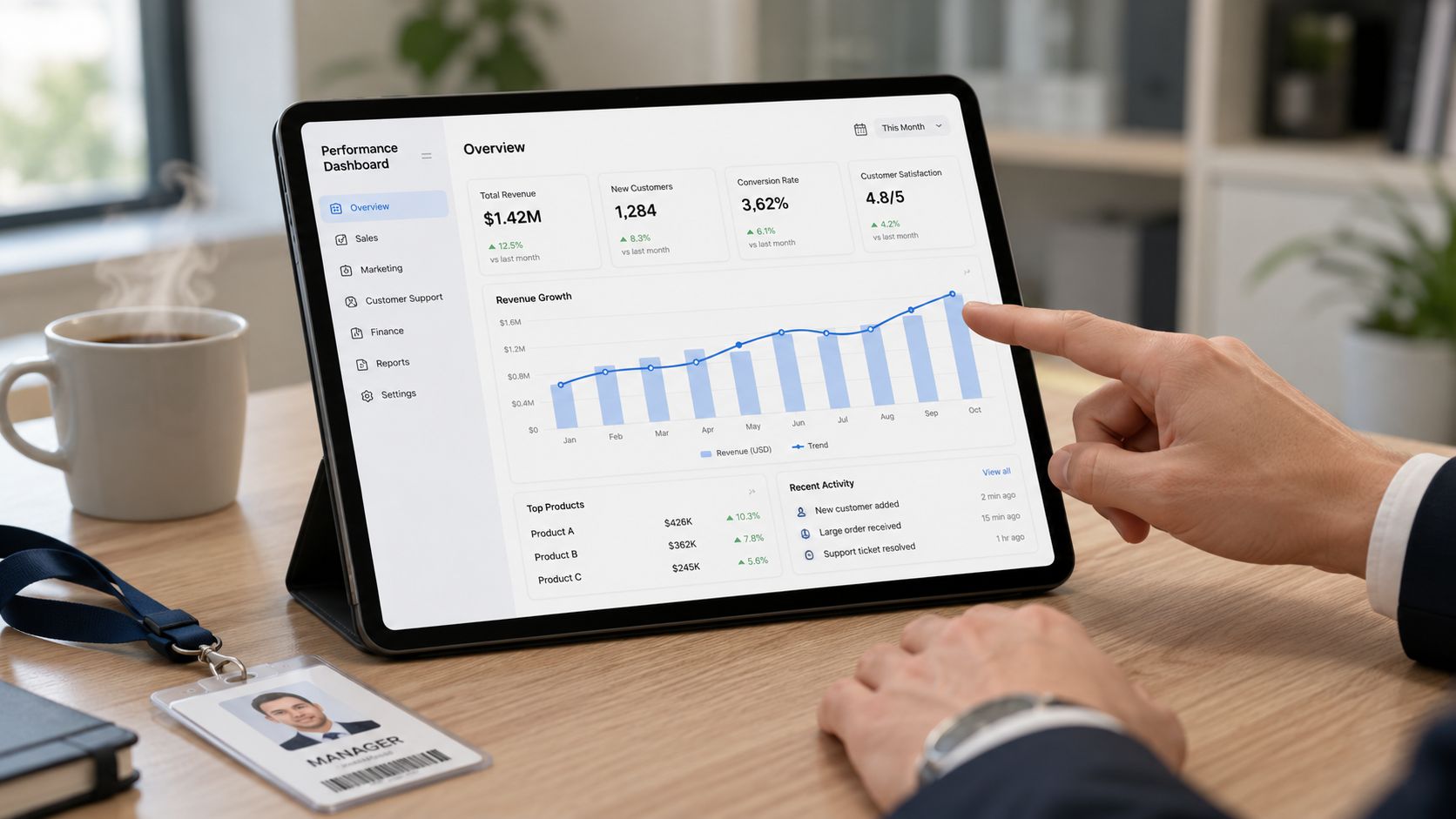
Connecting Experience to Performance
To build a rock-solid business case, you have to reframe your initiative. It’s not a “cost center” for HR; it’s a strategic investment in operational excellence.
Start by pinpointing the exact operational headaches your project will solve. From there, you can choose the right key performance indicators (KPIs) to track before and after you make a change.
- Employee Turnover and Retention: A great Workforce Experience is one of the best defenses against attrition. Keep a close eye on turnover rates, especially for critical roles or frontline staff who are often the first to leave. Lowering turnover slashes recruitment costs, keeps valuable knowledge from walking out the door, and creates a more stable customer experience.
- Time-to-Productivity: How fast can a new hire start adding real value? By giving people intuitive tools and clear, accessible processes from day one, you can dramatically shorten their ramp-up time and accelerate their impact on the business.
- Operational Errors and Safety: In fields like manufacturing, logistics, or healthcare, a confusing process or hard-to-find information can lead to expensive mistakes or, worse, safety incidents. A streamlined digital experience that puts knowledge right at employees’ fingertips can directly reduce error rates and improve safety compliance.
Building Your Business Case with Data
The link between a poor experience and poor financial results is clearer than ever. In 2026, global employee engagement cratered to a historic low of just 20%, a slump that is wiping an estimated $10 trillion in productivity from the global economy each year. Think about that: 80% of the world’s workforce is either just going through the motions or actively disengaged, and a big driver of this downturn is low engagement among managers themselves.
On the flip side, the data proves that getting this right pays off. Highly engaged organizations see 59% less employee turnover, making Workforce Experience a core driver of business performance. You can learn more about the impact of engagement on the global workforce and see the numbers for yourself.
By connecting a better Workforce Experience to lower absenteeism, fewer operational mistakes, and higher customer satisfaction scores, you can prove that investing in smoother operations and superior tools for employees is a direct investment in the company’s financial health.
In the end, calculating the ROI of your Workforce Experience is all about telling a compelling story with data. It’s about demonstrating that when you make it easier for people to do great work, the entire business reaps the rewards.
Workforce Experience FAQs
As more companies start talking about “Workforce Experience,” it’s natural to have some questions. Let’s clear up a few of the most common ones and give you some practical guidance.
What is the difference between Employee Experience and Workforce Experience?
Think of it this way: Employee Experience (EX) has traditionally focused on how people feel about their work. It covers culture, a sense of belonging, and engagement, the things that make someone feel connected to their team and the company’s mission. Workforce Experience (WX) takes that foundation and adds a critical, practical layer: workforce operations. It looks at the actual tools, processes, and digital systems people use to get their jobs done every day. WX is the combination of feeling good about your work and having the right setup to actually be productive and effective.
Who owns Workforce Experience in an organization?
The short answer is that no single person or department can own it alone. It’s a team sport. While HR often leads the people and culture side of the strategy, they can’t succeed without true partners across the business. A great Workforce Experience is created when a cross-functional team including leaders from Operations, Internal Communications, and IT work together. When these groups collaborate, they create a seamless and supportive experience for every employee.
How can we start improving our Workforce Experience with a limited budget?
You don’t have to start with a big software investment. The best first step costs nothing at all: listen to your people. Run quick pulse surveys or hold informal focus groups with your frontline employees. Ask managers what their teams complain about most. Is there a frustrating form that takes forever to fill out? A confusing process that can be simplified? Focusing on this “friction reduction” delivers quick wins that make a real difference, building momentum to justify a bigger budget later.
How does AI impact the future of Workforce Experience?
Artificial Intelligence can be a game-changer for your Workforce Experience, but it all comes down to how you use it. When done right, AI can be an incredible ally, personalizing communications, automating tedious tasks, and anticipating employee needs to make work simpler. The danger is implementing AI without thinking through the human side. If it feels like a surveillance tool or adds complexity, it will only create frustration. The key is to ensure AI is used to empower employees, not just monitor them, freeing people up to do more meaningful work.
For those interested in contributing their own insights on topics like this, consider exploring opportunities to write for Turn On Work.