

Tribal knowledge in frontline operations is the undocumented expertise employees develop through daily work, including troubleshooting techniques, process exceptions, and practical judgment. Capturing it requires identifying critical expertise, documenting experienced employees’ methods, and sharing validated knowledge through training and accessible resources. HubEngage, Dozuki, Microsoft SharePoint, Trainual, and MaintainX support different parts of this process, from workplace knowledge sharing to SOP documentation, employee training, and maintenance knowledge retention.
Key Takeaways
- Tribal knowledge is valuable but vulnerable. Experienced frontline employees often understand operational details that formal documentation overlooks. When they leave, organizations risk losing important expertise.
- Capture knowledge before employees leave. Structured interviews, job shadowing, demonstrations, and expert validation help preserve practical knowledge before retirement, resignation, or reassignment.
- Documentation and training must work together. SOPs preserve repeatable instructions, while mentoring and supervised practice transfer judgment and hands-on skills.
- Frontline accessibility matters. Searchable knowledge bases, mobile-friendly resources, and communication across shifts and locations help employees find and apply approved information.
- Measure knowledge application, not document volume. Effective knowledge retention programs evaluate employee understanding, practical competence, information accessibility, and relevant operational outcomes.
What Is Tribal Knowledge in the Workplace?
Tribal knowledge refers to practical information, skills, experience, and organizational know-how that employees develop and share informally but do not consistently document in official systems.
It often includes the details employees learn through repetition, observation, problem-solving, and working with experienced colleagues.
In frontline operations, tribal knowledge can explain how employees recognize equipment problems, handle unusual situations, avoid recurring errors, or coordinate work when standard procedures do not provide complete guidance.
Consider a manufacturing operator who notices a subtle change in machine vibration before a recurring fault appears. The official SOP may explain routine inspection requirements, but the operator’s experience helps them recognize when something is abnormal.
Similarly, an experienced retail associate may understand why certain inventory discrepancies occur, while a warehouse supervisor may know which operational conditions consistently create picking errors.
These insights become tribal knowledge when they circulate through conversations and informal training rather than being captured in accessible, validated documentation.
The challenge is not that employees possess this expertise. It is that organizations may depend on individuals to remember and explain information that other employees also need.
Tribal Knowledge vs. Tacit Knowledge vs. Explicit Knowledge
Tribal knowledge, tacit knowledge, explicit knowledge, and institutional knowledge are closely related, but the terms describe different aspects of workplace expertise.
| Knowledge Type | Definition | Frontline Example |
|---|---|---|
| Tribal knowledge | Informally shared organizational knowledge that is not consistently documented | Warehouse employees know why a recurring receiving problem occurs |
| Tacit knowledge | Experience-based skills and judgment that are difficult to fully explain | A technician recognizes equipment problems through subtle sounds or vibrations |
| Explicit knowledge | Information formally recorded for others to reference | An approved maintenance procedure or inspection checklist |
| Institutional knowledge | Accumulated understanding of an organization’s processes, history, and decisions | A facility manager knows why an earlier production method was discontinued |
The distinction matters because different kinds of knowledge require different transfer methods.
An experienced employee may easily explain an undocumented process. Once validated and recorded, that information becomes explicit knowledge.
However, an employee’s ability to recognize unusual equipment behavior may require observation, supervised practice, and experience before another worker can develop the same judgment.
The American Productivity & Quality Center’s knowledge transfer guidance explains that organizations should select transfer methods according to the nature of the knowledge, the intended recipients, and how quickly the expertise needs to be transferred.
This is particularly relevant to tacit knowledge management. Documentation can preserve instructions, but it cannot automatically reproduce every skill developed through years of practical experience.
Why Is Tribal Knowledge Important in Frontline Operations?
Tribal knowledge matters because frontline work frequently depends on operational details that formal procedures and initial training do not fully explain. When important expertise remains concentrated among experienced employees, organizations become more vulnerable to knowledge loss, inconsistent execution, and operational disruption.
The problem is especially relevant in manufacturing facilities, retail stores, warehouses, healthcare operations, hospitality businesses, and field service organizations.
Critical expertise becomes dependent on individual employees
Most frontline organizations have experienced employees who informally guide operations.
Colleagues approach them when equipment behaves unexpectedly, instructions are unclear, or a recurring problem needs additional context.
These employees provide considerable value, but organizations can become dependent on their availability.
When an experienced technician retires or a warehouse supervisor moves to another facility, remaining employees may struggle to resolve problems that previously required only a brief conversation.
Knowledge retention strategies help organizations identify this dependency and transfer critical expertise before it disappears.
Operational practices become inconsistent across locations
Distributed organizations often discover that different teams perform similar activities in different ways.
One retail location may document inventory discrepancies carefully, while another relies on verbal explanations. Different production shifts may have developed slightly different troubleshooting approaches.
Some differences reflect legitimate local conditions or useful improvements. Others may represent misunderstandings, outdated practices, or unauthorized workarounds.
A structured frontline knowledge management process helps organizations distinguish between these situations.
Managers can evaluate local observations, identify practices worth standardizing, and clarify where location-specific procedures are necessary.
Frontline onboarding becomes less consistent
New employees need to understand more than the standard sequence of tasks.
They must also learn common exceptions, warning signs, escalation responsibilities, and the reasoning behind important operational decisions.
Without structured knowledge transfer, onboarding can depend heavily on which experienced employee happens to provide training.
One new hire may receive detailed explanations and practical demonstrations. Another may learn the same work through trial and error.
Documenting important knowledge and connecting it with structured coaching helps establish more consistent learning experiences.
Opportunities for operational improvement remain hidden
Frontline employees frequently identify recurring problems, inefficient steps, or confusing instructions through everyday work.
However, organizations may not have a reliable process for collecting and evaluating those observations.
Tribal knowledge management creates an opportunity to turn employee experience into structured operational feedback.
When useful insights are validated and incorporated into approved workflows, knowledge sharing can support continuous improvement rather than functioning only as a response to employee turnover.
What Are Examples of Tribal Knowledge in Frontline Operations?
Frontline tribal knowledge includes undocumented troubleshooting methods, operational exceptions, equipment history, customer-handling judgment, and informal coordination practices.
Its practical value differs across industries.
| Industry | Tribal Knowledge Example | What Organizations Should Capture |
|---|---|---|
| Manufacturing | Experienced operators recognize recurring equipment warning signs | Observable symptoms, operating conditions, diagnostic checks, and approved escalation actions |
| Retail | Associates understand recurring inventory discrepancies | Common causes, verification steps, and authorized resolution procedures |
| Warehousing | Workers recognize conditions that cause picking or loading errors | Error patterns, approved handling instructions, and reporting requirements |
| Healthcare operations | Employees understand recurring administrative handoff problems | Workflow responsibilities, documentation needs, and escalation contacts |
| Hospitality | Experienced staff coordinate service recovery during unexpected disruptions | Department responsibilities, communication requirements, and service standards |
| Field service | Technicians recognize recurring problems associated with particular equipment | Equipment history, troubleshooting observations, approved procedures, and specialist contacts |
These are illustrative scenarios, not documented customer case studies.
Manufacturing: Capturing experienced operators’ expertise
Imagine a manufacturing facility where a long-serving operator recognizes that a particular machine develops an unusual vibration before recurring quality problems.
The official work instruction explains normal machine operation but does not discuss the warning sign.
A knowledge-capture session could document what the operator observes, the operating conditions involved, and the historical problems associated with that observation.
Engineering and maintenance specialists would then evaluate the information.
The organization might revise an inspection checklist, introduce a diagnostic reference, or provide additional employee training.
This approach preserves valuable experience without automatically authorizing an informal repair method.
Retail: Sharing useful local knowledge across stores
A senior retail associate may understand that certain inventory discrepancies repeatedly occur during a specific receiving workflow.
Other locations might experience similar problems without understanding the cause.
The organization could capture the associate’s observations, investigate the problem, and develop an approved verification and reporting process.
Once validated, the information could be shared through store training, an employee knowledge base, and manager communications.
Local knowledge becomes more valuable when the organization can evaluate whether it applies across locations.
Logistics: Preventing knowledge loss between shifts
In distribution centers, experienced employees often understand which unresolved issues are likely to affect the incoming shift.
When those details remain in informal conversations, the next team may repeat troubleshooting, miss important information, or misunderstand responsibility.
Structured handovers preserve current operating conditions, outstanding issues, and assigned actions.
A knowledge base serves a related but different purpose: preserving validated instructions that employees can reuse when similar problems occur.
For a deeper explanation of this distinction, see TurnOnWork’s guide to shift handover communication, formats, templates, and common failures.
How to Capture Tribal Knowledge in Frontline Operations
Capturing tribal knowledge requires identifying critical expertise, observing experienced employees, documenting their decision-making, validating the information, and transferring it into everyday work.
The process should involve frontline workers and the managers or specialists responsible for approving operational guidance.
Step 1: Identify critical tasks and knowledge holders
Begin with activities that depend heavily on undocumented expertise.
Review recurring operational problems, troubleshooting requests, training gaps, unusual process exceptions, and tasks performed by only a few experienced employees.
Managers can identify likely knowledge holders, but frontline workers should also be invited to contribute.
Questions worth asking include:
- Which tasks regularly require assistance from an experienced employee?
- What becomes difficult when a particular worker is absent?
- Which processes contain undocumented exceptions?
- What expertise could disappear through retirement or turnover?
- Where do different shifts follow inconsistent instructions?
- Which recurring problems are repeatedly explained through conversations?
The objective is to identify the organization’s most important knowledge gaps before beginning documentation.
Step 2: Observe employees performing actual work
Observation often reveals details that interviews miss.
Experienced employees may recognize warning signs, perform small checks, or make decisions almost automatically. Because these actions feel routine, they may not mention them when describing their responsibilities.
A facilitator can observe an authorized task and ask the employee to explain what they are checking, why it matters, and how they recognize abnormal conditions.
Where permitted, organizations can capture demonstrations using photographs, video, screen recordings, or structured notes.
Observation must follow applicable safety requirements and should not interfere with normal safe operations.
Step 3: Conduct structured knowledge-capture interviews
A good knowledge-capture interview explores decision-making rather than simply documenting routine steps.
Ask employees to describe situations when the normal process did not work as expected.
Useful questions include:
- What was the first indication that something was wrong?
- How did you identify the likely cause?
- Which alternative explanations did you consider?
- What mistakes do newer employees commonly make?
- Which warning signs require escalation?
- What has changed about this process over time?
- Which parts of your approach are approved requirements, and which are personal observations?
These questions help distinguish repeatable procedural information from experience-based judgment.
APQC’s 2025 resource, Questions to Capture Knowledge from Project Managers and Teams, explains how structured interviews with experienced employees can uncover decisions, lessons learned, and practical knowledge that may not appear in existing documentation.
Step 4: Capture the reasoning behind decisions
Tribal knowledge documentation should explain when and why employees take particular actions.
An instruction such as “Check the shipment information” may be correct but incomplete.
A useful procedure should explain which information requires verification, what indicates a discrepancy, how the issue must be recorded, and who is authorized to resolve it.
This contextual information helps employees apply the guidance correctly when real operating conditions differ from a routine example.
Step 5: Validate information with responsible experts
Captured knowledge should not automatically become an approved operating procedure.
Experienced employees may have developed valuable improvements, but they may also use outdated practices or unauthorized workarounds.
The relevant supervisor, process owner, engineer, safety professional, or other qualified reviewer should verify the information.
Validation should establish whether the observation is accurate, whether the action is authorized, and whether the practice should be adopted more broadly.
If the information reveals an unsafe workaround, the organization should investigate and correct the problem rather than formalize the practice.
Step 6: Convert knowledge into appropriate formats
Different types of knowledge require different documentation methods.
Routine instructions may become SOPs or checklists. Visual techniques may be easier to demonstrate through short videos. Recurring faults may require troubleshooting guides or decision trees.
Complex skills may need structured mentoring and supervised practice.
The format should match the way employees will use the information.
For example, a worker looking for an escalation contact during a shift should not need to read a lengthy training manual to locate that answer.
Step 7: Test knowledge transfer with other employees
Documentation should be tested by employees who did not create it.
Ask relevant workers to locate the information, explain the instructions, and demonstrate the associated task under appropriate supervision.
Observe where they hesitate, misunderstand terminology, or require additional explanation.
Use the findings to improve the material before distributing it more widely.
For complex tasks, evaluate practical competence rather than relying entirely on reading comprehension or training completion.
Step 8: Publish and maintain the approved knowledge
Once validated, the material should be published through the appropriate knowledge management system and connected with relevant training and operational workflows.
Every authoritative resource should have an accountable owner, approval status, version information, and appropriate review requirements.
Employees should also have a straightforward way to report outdated instructions or suggest improvements.
Capturing employee expertise is only the beginning. The information must remain accurate and accessible after the original knowledge holder is no longer available.
Which Tribal Knowledge Should Organizations Capture First?
Organizations should prioritize knowledge according to operational impact, concentration among employees, and risk of loss.
Attempting to document every informal practice at once can consume substantial resources without addressing the most important knowledge gaps.
The TurnOnWork Critical Knowledge Priority Model
The following is a TurnOnWork editorial framework, not an established or scientifically validated industry scoring system.
It provides a practical starting point for evaluating knowledge retention priorities.
| Evaluation Factor | Low: 1 Point | Moderate: 2 Points | High: 3 Points |
|---|---|---|---|
| Operational impact | Limited inconvenience if unavailable | Noticeable disruption, rework, or quality issues | Major operational or business consequences |
| Knowledge concentration | Several trained employees know the process | A limited group holds the expertise | One or two individuals hold most of the expertise |
| Risk of knowledge loss | Expertise is stable and readily available | Potential loss through workforce changes | Expertise may soon become unavailable |
Calculate the score using:
Priority Score = Operational Impact × Knowledge Concentration × Risk of Knowledge Loss
The result ranges from 1 to 27.
Suggested prioritization thresholds are:
- 18–27: Prioritize structured knowledge capture and transfer.
- 8–17: Schedule targeted documentation and coaching.
- 1–7: Use lighter knowledge-sharing processes where appropriate.
These thresholds are editorial recommendations, not universal benchmarks.
Safety-critical, legally required, or otherwise mandatory knowledge should always follow the organization’s applicable risk, safety, and compliance requirements, regardless of the score.
Example: Prioritizing knowledge before an employee retires
Consider a maintenance specialist who is preparing to retire and is the only employee familiar with a particular legacy production asset.
Managers assess the knowledge as having high operational impact, high concentration, and high risk of loss.
The score is:
3 × 3 × 3 = 27
This indicates a strong need for structured knowledge transfer.
The organization could schedule interviews, review historical maintenance records, document approved troubleshooting observations, and arrange practical training for successor technicians.
A routine administrative process already understood by several employees might require less intensive documentation.
This approach helps managers focus limited time on expertise that is difficult to replace.
How Do You Convert Tribal Knowledge Into Standard Operating Procedures?
Converting tribal knowledge into standard operating procedures means translating validated employee experience into clear, repeatable instructions.
Effective SOPs explain the task, required conditions, approved actions, exceptions, and escalation responsibilities.
Not every piece of tribal knowledge belongs in an SOP. Some information is more useful as a troubleshooting reference, training resource, or lessons-learned record.
What should a frontline SOP include?
| SOP Component | Information to Include |
|---|---|
| Procedure title | Clear description of the activity |
| Purpose | Why the procedure exists |
| Scope | Applicable employees, locations, and equipment |
| Prerequisites | Required training, authorization, tools, and safety conditions |
| Procedure steps | Approved actions in the correct sequence |
| Decision points | Conditions that determine the next action |
| Exceptions | Appropriate responses when normal conditions do not apply |
| Escalation | When to stop, report, or request assistance |
| Verification | How correct completion is established |
| Document ownership | Responsible owner and approver |
| Version control | Effective date, revision history, and review requirements |
For more complex tasks, organizations can include photographs, diagrams, videos, or links to relevant equipment manuals.
Example: Converting informal retail knowledge into a documented process
Suppose experienced store associates know how to recognize a recurring mismatch between received inventory and shipment records.
Newer employees may not know which details to verify or how to report the problem.
A validated procedure could contain the following steps:
Procedure: Reporting a Receiving Quantity Discrepancy
Purpose: Ensure shipment discrepancies are documented and reviewed consistently.
Applicable roles: Authorized receiving associates and inventory supervisors.
- Compare the received quantity with shipment documentation.
- Verify the relevant product identifiers and receiving records.
- Record unresolved discrepancies through the approved inventory exception process.
- Notify the designated supervisor or inventory-control contact.
- Do not make unauthorized stock adjustments or bypass required controls.
- Follow the organization’s approved resolution and escalation procedure.
Verification: The discrepancy has been documented and assigned to an authorized employee.
Document owner: Inventory Operations.
This illustrative example demonstrates documentation structure rather than prescribing a universal inventory procedure.
Each organization must apply its approved operating processes.
Why SOP validation matters for safety
Safety-sensitive procedures require particular care.
For example, OSHA’s process safety management standard, 29 CFR 1910.119, establishes written operating procedure, training, and related requirements for covered processes involving highly hazardous chemicals.
Those requirements do not apply identically to every workplace.
However, they illustrate why organizations should distinguish informal observations from officially approved operating instructions.
Qualified review, document control, and employee understanding are essential when knowledge affects safety or regulatory obligations.
How Can Organizations Share Tribal Knowledge Across Shifts and Locations?
Effective knowledge sharing combines accessible documentation, practical training, peer learning, and consistent operational communication.
The objective is to ensure employees can find and apply reliable information regardless of where or when they work.
Choose the right knowledge transfer method
| Method | Best Suited For | Main Limitation |
|---|---|---|
| SOPs and checklists | Repeatable activities requiring consistency | May not explain complex judgment |
| Video demonstrations | Physical techniques and visual tasks | Can become outdated |
| Job shadowing | Learning through observation | Depends on the trainer and available work |
| Mentoring | Developing experience-based judgment | Requires dedicated time |
| Peer learning sessions | Sharing insights across teams | Useful insights still need validation |
| Troubleshooting guides | Recurring operational problems | Cannot anticipate every situation |
| Shift handover records | Transferring current operational context | Require consistent updates |
| Searchable knowledge bases | Accessing approved information | Depend on quality and accessibility |
Organizations should combine these methods according to the type of expertise being transferred.
For example, a maintenance apprentice may review a troubleshooting guide, observe an experienced technician, complete supervised practice, and demonstrate competence before independently performing an authorized task.
Make knowledge sharing part of operational routines
Knowledge sharing should fit into existing activities wherever possible.
Shift briefings, operational reviews, onboarding sessions, and post-incident discussions provide opportunities to identify information that needs documentation.
Supervisors can ask employees about recurring problems and determine whether the solution requires a process update, additional training, or a temporary operational communication.
Once the information is validated, it should reach other employees who may encounter the same situation.
Give frontline employees opportunities to contribute
Frontline employees should have practical ways to suggest improvements and flag outdated instructions.
Organizations might use digital forms, supervisor discussions, or feedback mechanisms attached to knowledge resources.
Managers should acknowledge contributions and communicate whether suggestions were adopted, rejected, or referred for additional investigation.
A knowledge-sharing culture becomes stronger when employees can see that their practical experience is considered and evaluated.
Connect knowledge transfer with workforce planning
Knowledge retention should begin before experienced employees retire or resign.
Managers can identify critical roles, arrange successor training, and schedule mentoring while knowledgeable employees remain available.
Exit interviews may provide useful information, but they rarely offer enough time to transfer complex judgment or practical skills.
Ongoing cross-training and structured succession planning provide a more reliable approach.
How Do You Build a Searchable Frontline Knowledge Base?
A searchable frontline knowledge base organizes approved information so employees can locate relevant guidance while performing their responsibilities.
It should be structured around real operational questions rather than simply reproducing department folders.
Organize content around work activities
Employees often search by the problem they are trying to solve.
A warehouse worker may search for “damaged shipment,” while a technician may search for an equipment model or fault description.
Knowledge resources should therefore include clear titles, relevant terms, and useful metadata.
Important fields include:
- Applicable roles, departments, and locations.
- Relevant equipment or operational processes.
- Document owner and approval status.
- Effective date and version.
- Related procedures and training materials.
- Escalation contacts and review requirements.
Where instructions differ between locations, employees should be able to identify the version that applies to them.
Design for frontline access
Deskless employees may not have dedicated computers, corporate email accounts, or reliable network connectivity.
Organizations should evaluate access through approved mobile devices, shared workstations, kiosks, and workplace tablets.
For lower-connectivity environments, verify whether the required information is available offline and how updates are synchronized.
Language accessibility, readable formatting, and suitable visual guidance also matter.
A knowledge base is only useful when the intended employees can reach and understand its content.
Establish clear document governance
Knowledge repositories can become unreliable when employees encounter several versions of the same procedure.
Each authoritative resource should have a designated owner responsible for accuracy, approval, and maintenance.
Organizations should also establish a process for reviewing content after changes to equipment, policies, systems, or operating conditions.
Employees need to know which instructions are current and how to report potentially outdated information.
For organizations assessing whether workplace information actually reaches their deskless employees, TurnOnWork’s multichannel internal communications audit checklist provides a complementary framework for reviewing access, communication coverage, employee feedback, and governance.
Which Digital Tools Support Frontline Tribal Knowledge Management in 2026?
Digital frontline knowledge management platforms help organizations document expertise, organize approved procedures, distribute information, and connect knowledge with employee training.
However, the five platforms below serve different primary purposes. The comparison is based on publicly available vendor documentation rather than hands-on product testing.
1. HubEngage — Best for Sharing Frontline Knowledge Across Distributed Workforces
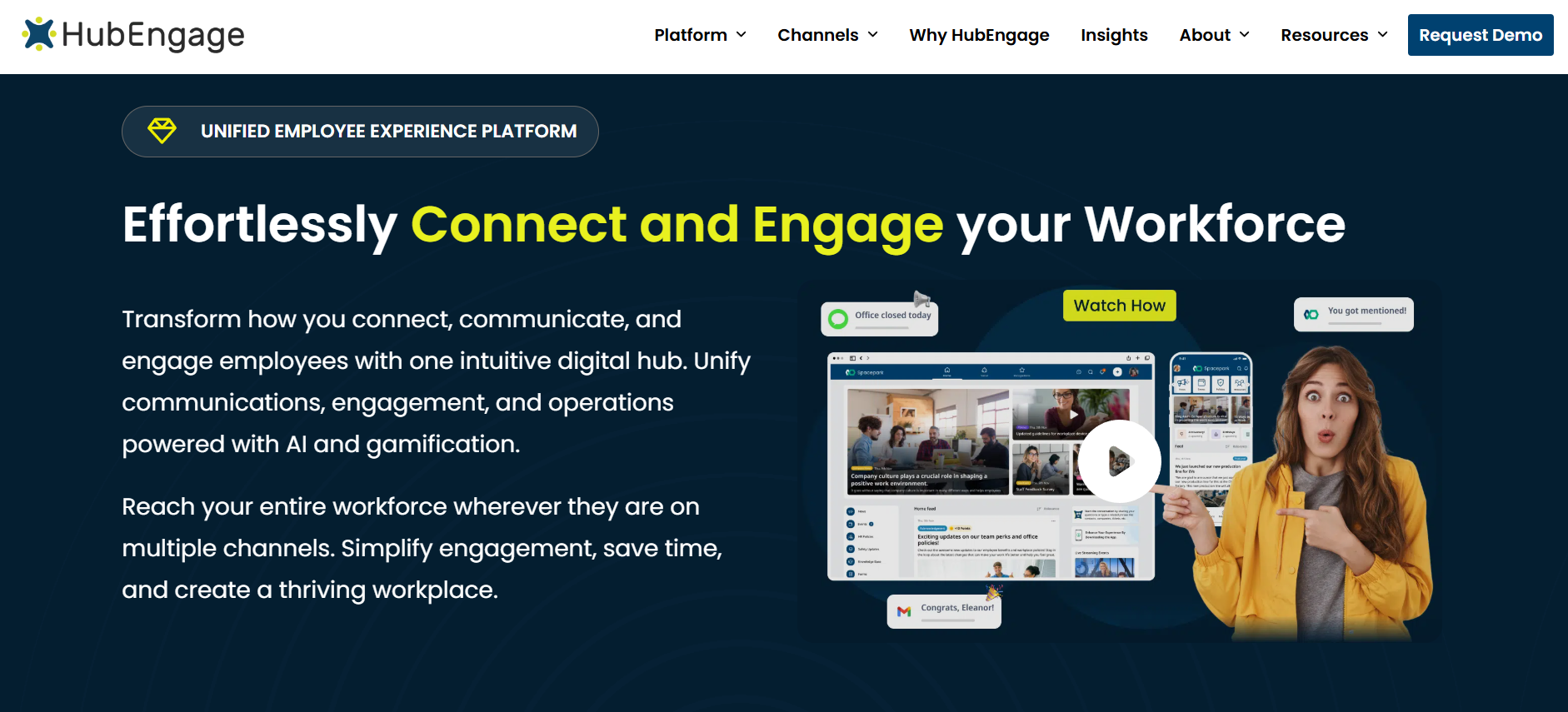
Best for: Retail, healthcare, hospitality, manufacturing, logistics, and distributed organizations that want employees to access workplace knowledge alongside communication, learning, and engagement resources.
HubEngage is an employee experience and internal communications platform that combines employee intranet capabilities, workplace knowledge resources, AI-powered search, communication, and engagement tools.
Its relevance to tribal knowledge management lies primarily in making documented expertise accessible to employees working across different shifts, departments, and locations.
Organizations can use HubEngage to organize SOPs, company policies, training materials, and operational guidance within an employee intranet. Its AI-powered search helps employees locate relevant information without relying entirely on traditional folder structures or exact document titles.
The platform also supports communication through mobile applications, web access, email, SMS, and digital signage. This multichannel approach is useful for organizations whose frontline employees may not routinely access corporate computers or email.
HubEngage’s broader capabilities include employee learning, surveys, recognition, and engagement tools. These can support communication about procedural changes, knowledge-related training, and employee feedback.
How HubEngage supports tribal knowledge transfer
Consider a retail organization operating multiple stores with different shift patterns.
Experienced employees identify recurring inventory-handling problems and share their observations with managers.
After the organization verifies the information and approves updated instructions, the relevant resources can be published through the employee intranet.
Store associates can access the approved guidance, while managers communicate changes to affected teams through appropriate channels.
Training resources and feedback mechanisms can help reinforce the update and identify additional questions.
The main advantage of this approach is connecting knowledge distribution with the communication channels employees already use.
Limitations: HubEngage is broader than a dedicated industrial work-instruction platform. Organizations requiring detailed machine-level procedure execution, engineering document control, or maintenance work-order management should evaluate those requirements separately. Buyers should confirm the approval workflows, access permissions, integrations, and AI capabilities included in their proposed configuration.
Pricing: HubEngage uses quote-based pricing. Organizations should request pricing based on employee population, required modules, communication channels, integrations, and implementation needs.
2. Dozuki — Best for Manufacturing Work Instructions and Technical Knowledge Capture
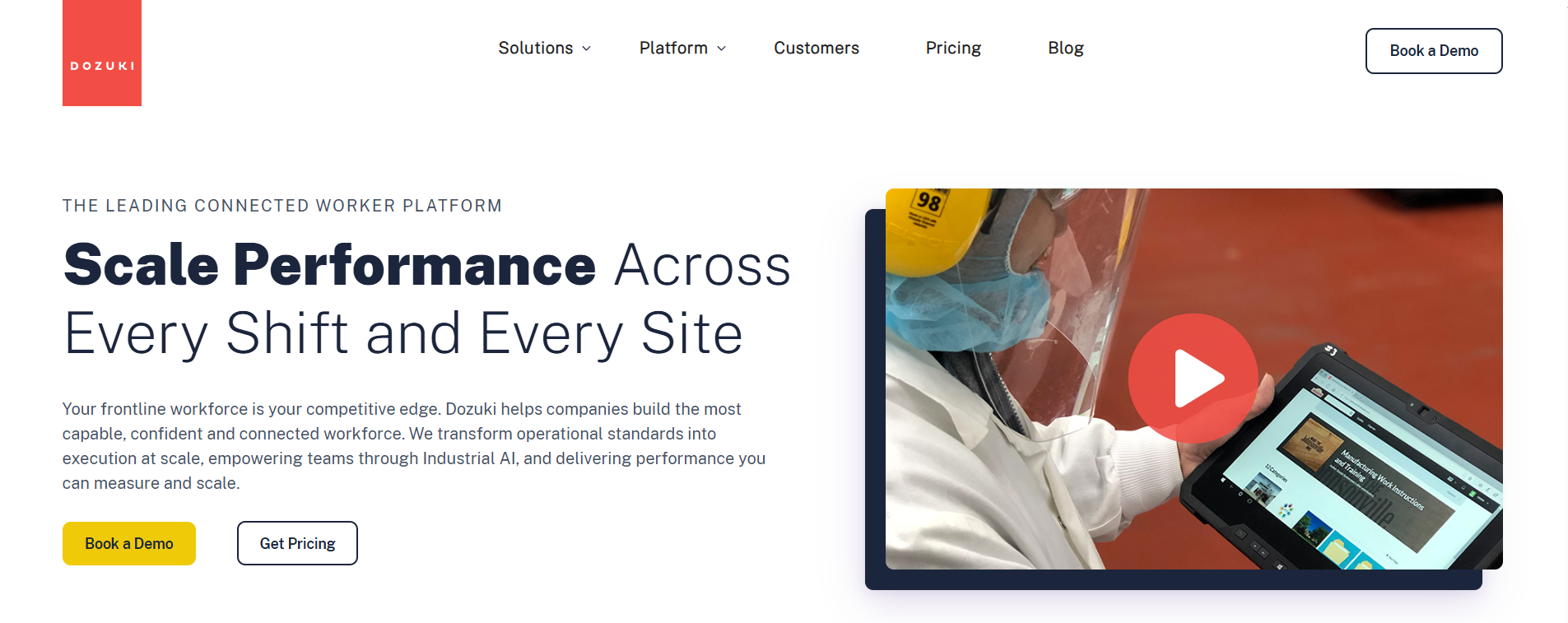
Best for: Manufacturing companies, industrial operations, production teams, and technical training departments that need visual work instructions, controlled documentation, and structured skills development.
Dozuki is a connected worker platform designed to help industrial organizations document operational procedures, standardize work, and connect instructions with frontline employee training.
It is particularly relevant to tribal knowledge management because experienced operators and technicians frequently understand technical details that are missing from traditional manuals.
Dozuki supports step-by-step work instructions that combine text, photographs, video, and visual annotations. Organizations can use these capabilities to document production procedures, inspections, equipment changeovers, and recurring technical tasks.
The platform includes document control, approval workflows, worker feedback, and structured learning capabilities. These help organizations manage procedure revisions and connect approved instructions with employee development.
Dozuki also offers CreatorPro AI, which can assist with converting expert demonstrations and existing documentation into draft procedures.
Generated material still requires technical review before it becomes approved operational guidance.
How Dozuki supports tribal knowledge transfer
Consider a manufacturing business preparing for the retirement of an experienced production operator.
The organization could record authorized demonstrations, capture the operator’s explanations, and create visual procedures covering important tasks and common exceptions.
Engineering or operational specialists would validate the documentation before approval.
The approved material could then support training pathways for employees who need to develop the same operational skills.
This approach connects knowledge capture with standardized work and practical workforce development.
Limitations: Dozuki is most suitable when knowledge must become structured technical instructions and operational training content. Its industrial focus may be unnecessary for organizations mainly seeking general employee communications, HR policies, or a company handbook. Buyers should verify plan-specific capabilities, integrations, offline access, and implementation requirements.
Pricing: Dozuki does not publish standardized subscription rates on its public pricing page. Organizations should request a quote covering relevant modules, employee access, content authoring, training, and implementation.
3. Microsoft SharePoint — Best for Centralized Documentation and Knowledge Governance

Best for: Organizations already using Microsoft 365 that want to organize operating procedures, departmental information, historical process documentation, and institutional knowledge.
Microsoft SharePoint is a collaboration and content management platform that organizations can configure as a centralized knowledge repository.
It is especially useful when important operational information already exists in documents but remains distributed across shared folders, departmental drives, and individual employee accounts.
SharePoint supports document libraries, metadata, permissions, version history, and collaborative editing. These capabilities help organizations establish controlled repositories for approved SOPs, troubleshooting guides, equipment information, and lessons learned.
Review and publishing workflows can also be configured using SharePoint and related Microsoft tools, including Power Automate where appropriate.
Integration with Microsoft 365 can support collaboration between subject-matter experts, process owners, and training teams.
AI-related capabilities may improve knowledge discovery, but organizations should distinguish standard SharePoint functionality from Microsoft 365 Copilot and other services that may require additional licensing.
How SharePoint supports tribal knowledge transfer
A logistics company could create a central repository for warehouse procedures, recurring inventory problems, and equipment instructions.
Experienced supervisors could contribute draft material, while designated process owners review and approve updates.
Authorized employees could then access the current documentation through an appropriately configured site.
Version records and document ownership would help the organization maintain reliable information over time.
Limitations: SharePoint requires deliberate information architecture and content governance. Moving files into a document library does not automatically create an effective frontline knowledge-sharing process. Organizations must also evaluate employee licensing, mobile access, authentication, training delivery, and practical skills development.
Pricing: Microsoft lists SharePoint Plan 1 at $5 per user per month, billed annually, on its US plan comparison page. SharePoint is also available through selected Microsoft 365 subscriptions. Additional services and licenses may affect the total cost.
4. Trainual — Best for SOP Documentation and Employee Onboarding
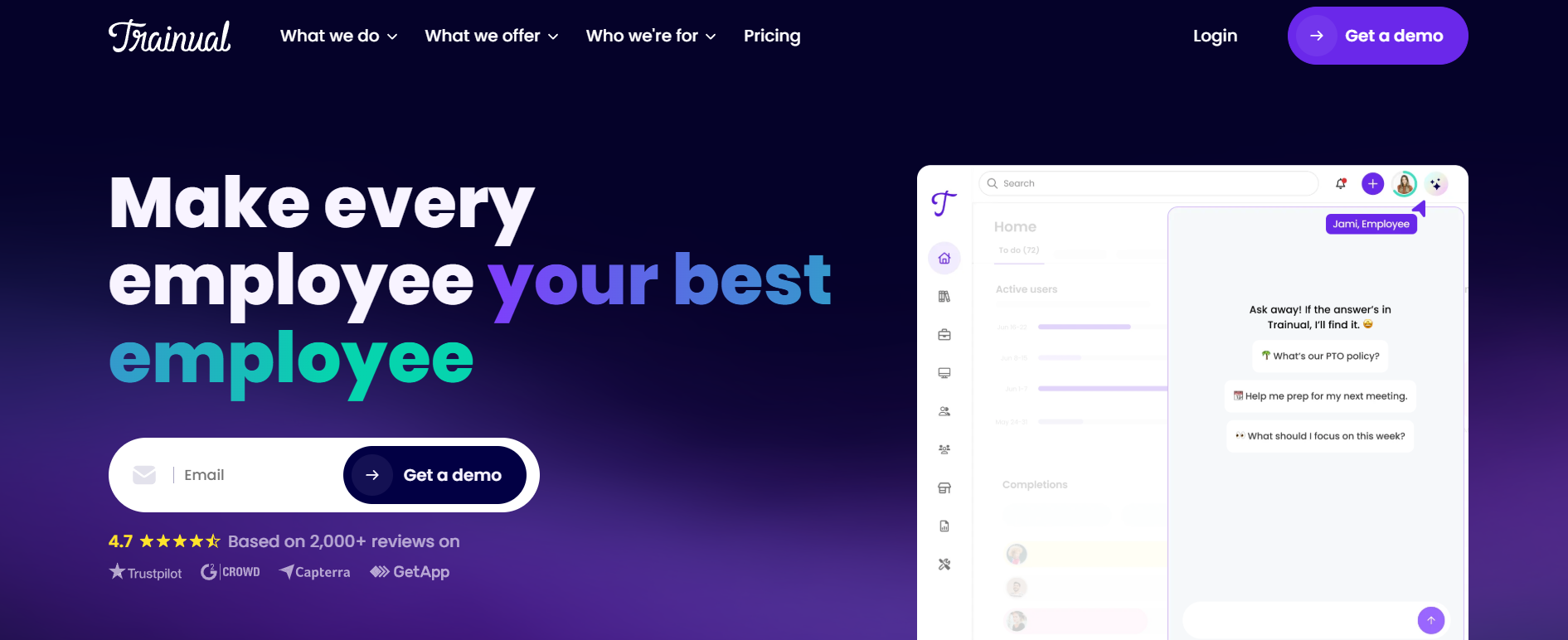
Best for: Growing businesses, multi-location service organizations, and operations teams that want to turn recurring processes into structured documentation and role-based training.
Trainual is an employee training and process documentation platform focused on organizing company knowledge, standardizing procedures, and supporting consistent onboarding.
Its relevance to tribal knowledge management is the connection between documenting what experienced employees know and teaching that information to other workers.
Trainual supports SOP creation, instructional content, videos, screen recordings, training assignments, and progress tracking.
Its AI-assisted documentation capabilities can help organizations prepare draft procedures, while AI-powered search supports employees looking for information within the company’s knowledge resources.
The platform also provides testing and training accountability features, along with content management capabilities such as verification reminders and version history.
Feature availability and limits depend on the selected subscription.
How Trainual supports tribal knowledge transfer
Consider a multi-location home services business where experienced field supervisors provide most of the practical onboarding guidance.
Those supervisors may understand recurring scheduling problems, service exceptions, customer communication expectations, and operational responsibilities that are not consistently documented.
The organization could capture and validate these processes in Trainual, then organize them into structured training for relevant roles.
Managers could assign learning activities, monitor completion, and provide additional coaching where practical skills require reinforcement.
Limitations: Trainual is primarily focused on process documentation and employee learning rather than industrial execution or equipment maintenance management. Technical roles may still require specialized operating instructions, qualified trainers, and supervised competency assessments. Training completion should not be treated as proof of practical competence.
Pricing: Trainual lists Core, Pro, Premium, and Enterprise plans. Fixed subscription amounts are not displayed on its main public pricing page. Organizations should request pricing and compare training features, content limits, version history, integrations, and support.
5. MaintainX — Best for Preserving Maintenance and Equipment Troubleshooting Knowledge
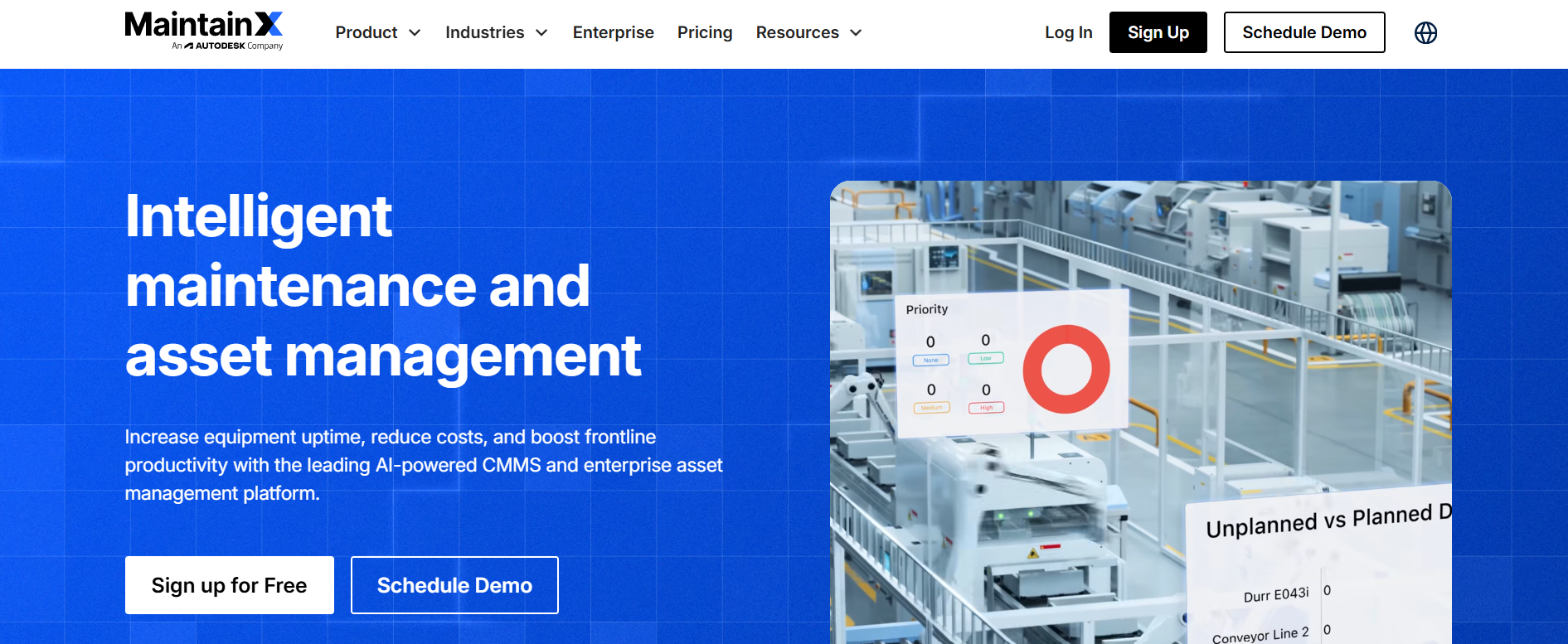
Best for: Industrial maintenance departments, facilities teams, reliability professionals, and organizations that need operational knowledge connected with equipment records and maintenance work orders.
MaintainX is a maintenance and asset management platform combining work orders, procedures, inspections, preventive maintenance, and equipment information.
Its value for tribal knowledge management comes from connecting technical instructions with the assets and maintenance activities where employees need them.
Organizations can create procedure templates, maintain procedure libraries, and attach relevant instructions to maintenance work orders.
Technicians can record completed work and preserve asset-related information, helping establish a history of recurring problems and previously completed maintenance.
MaintainX also provides an AI Procedure Generator that can create draft procedures from approved reference inputs, including documents, images, and descriptions.
MaintainX Assist, available on the Enterprise plan, supports information retrieval and troubleshooting using relevant maintenance manuals, procedures, and records.
How MaintainX supports tribal knowledge transfer
Imagine a manufacturing facility where a senior technician understands the recurring faults associated with an older production asset.
The organization could capture the technician’s observations, review historical maintenance records, and develop an approved troubleshooting procedure.
That procedure could then be connected with the asset and relevant work orders.
Other qualified technicians would have access to the information while carrying out authorized maintenance activities.
This helps preserve both equipment history and validated troubleshooting knowledge.
Limitations: MaintainX is primarily designed for maintenance and asset operations. Organizations requiring company-wide employee communication, broad HR knowledge sharing, or comprehensive workforce learning may need complementary systems. Buyers should also verify plan-specific procedure limits and distinguish general AI procedure generation from Enterprise-only assistance features.
Pricing: MaintainX publishes a free Basic plan, Essential at $20 per user per month billed annually, Premium at $65 per user per month billed annually, and customized Enterprise pricing. Features and usage limits differ by plan.
Frontline Knowledge Management Software Comparison
| Platform | Best For | Primary Knowledge Management Strength | Pricing Approach |
|---|---|---|---|
| HubEngage | Distributed frontline and deskless workforces | Employee knowledge access, intranet, communication, and learning | Custom quote |
| Dozuki | Manufacturing and industrial operations | Visual work instructions and controlled technical training | Custom quote |
| Microsoft SharePoint | Microsoft 365 organizations | Document governance, permissions, and centralized repositories | Public plan pricing |
| Trainual | Growing and multi-location businesses | SOP-based employee onboarding and training | Sales-led plans |
| MaintainX | Maintenance and facilities operations | Asset-specific procedures and maintenance history | Free, published paid plans, and Enterprise |
How should organizations choose between these platforms?
The most suitable platform depends on the organization’s knowledge management problem.
If the primary challenge is distributing approved information across stores, shifts, and locations, an employee communication and intranet platform may be appropriate.
If the organization needs detailed manufacturing work instructions, it should prioritize technical authoring, version control, operational workflows, and training verification.
Businesses already using Microsoft 365 may benefit from improving their existing content governance rather than introducing another knowledge repository.
Organizations focused on repeatable onboarding may prefer software that connects documentation directly with training assignments.
Maintenance teams should evaluate whether knowledge needs to be linked with assets, work orders, and historical maintenance information.
Before purchasing, ask vendors to demonstrate how an experienced employee’s undocumented knowledge becomes validated content, how frontline employees access it, and how the organization updates the material when conditions change.
Compare the complete cost of the proposed configuration, including licenses, implementation, integrations, training, administrative resources, and ongoing content management.
How Can AI Help Capture and Share Tribal Knowledge in 2026?
AI can reduce the manual work involved in capturing employee knowledge, drafting documentation, and retrieving approved workplace information.
However, AI-generated content should not be treated as authoritative until qualified personnel verify it.
AI-assisted interviews and transcription
Organizations can use approved tools to transcribe interviews and recorded demonstrations.
AI may help organize the resulting material into process steps, common exceptions, troubleshooting observations, and lessons learned.
This can make lengthy knowledge-capture sessions easier to review.
However, technical terms, contextual details, and employee explanations must be checked for errors or omissions.
AI-generated SOP drafts
AI-assisted authoring can turn notes, demonstrations, and existing documents into structured drafts.
This is useful when experienced employees have limited time to prepare formal documentation.
Nevertheless, generated instructions may omit important conditions, misunderstand a demonstration, or present an informal workaround as an approved step.
Responsible process owners must validate the content before publication.
AI-powered knowledge search
AI-powered search can help employees locate information through natural-language questions.
For example, a warehouse associate might ask where to find the approved procedure for reporting damaged inventory.
An effective system should retrieve relevant authorized resources, respect access permissions, and identify the supporting information.
When an answer is uncertain, employees should be directed to the appropriate approved source or qualified person.
AI governance and human oversight
The National Institute of Standards and Technology’s Generative AI Risk Management Profile, originally published in July 2024, guides identifying and managing generative AI risks.
For frontline knowledge management, relevant concerns include inaccurate outputs, sensitive data exposure, and inappropriate reliance on automatically generated instructions.
Organizations should establish clear review requirements for employee recordings, confidential information, technical procedures, and AI-generated content.
AI can accelerate knowledge capture and retrieval. It should not replace authorized procedures, qualified supervision, or professional judgment.
How Do You Measure Tribal Knowledge Sharing and Retention?
Organizations should evaluate knowledge management through accessibility, employee understanding, practical competence, and operational results.
Counting the number of uploaded documents does not establish whether employees can actually use the information.
Recommended knowledge management KPIs
| KPI | Measurement Approach | What It Shows |
|---|---|---|
| Critical knowledge coverage | Validated priority knowledge areas documented ÷ priority knowledge areas identified × 100 | Progress in addressing known gaps |
| Documentation approval rate | Approved submissions ÷ reviewed submissions × 100 | Progress in validating employee contributions |
| Knowledge retrieval success | Successful searches ÷ searches tested × 100 | Whether employees can locate useful information |
| Knowledge transfer completion | Employees completing required activities ÷ employees assigned × 100 | Participation in structured transfer |
| Demonstrated competence | Employees meeting assessment requirements ÷ employees assessed × 100 | Whether employees can apply required knowledge |
| Content correction time | Time from confirmed error to approved correction | Responsiveness of content governance |
| Repeat problem frequency | Recurring operational incidents within a defined period | Whether selected problems are changing |
These are recommended operational indicators rather than established industry benchmark targets.
Organizations should establish their own baselines and compare results across comparable employee groups, locations, and periods.
Test whether employees can find information
One practical approach is to ask employees from different shifts to locate an approved procedure without assistance.
Record whether they find the correct resource, how long retrieval takes, and whether they understand which instructions apply.
Repeat the test after improving the knowledge base.
This provides more useful evidence of accessibility than page views alone.
Evaluate practical competence
For technical or safety-sensitive tasks, employees may need supervised demonstrations or formal skills assessments.
Completing an online training module does not necessarily mean that someone can perform the task independently.
Managers should connect assessments with the responsibilities and risks of the role.
Organizations designing stronger knowledge transfer during onboarding can also consult TurnOnWork’s guide to onboarding software for frontline and deskless teams.
Connect knowledge management with business outcomes
Knowledge retention initiatives should ultimately support more reliable operational execution.
Relevant outcomes may include fewer recurring mistakes, more consistent onboarding, improved troubleshooting continuity, or reduced dependence on individual experts.
However, those outcomes can also change because of staffing, equipment, workload, or other operational factors.
Organizations should document the intervention, measure performance against a baseline, and avoid attributing every improvement exclusively to knowledge management.
What Are the Most Common Tribal Knowledge Management Mistakes?
Tribal knowledge programs often underperform when organizations concentrate on collecting information without ensuring that it is accurate, accessible, and useful.
Treating every informal practice as correct
Experienced employees may develop efficient approaches, but some practices can become outdated or conflict with approved procedures.
Knowledge capture should identify these practices for review rather than automatically establishing them as best practices.
Waiting until employees leave
Organizations frequently discover knowledge gaps when an experienced worker announces retirement or resignation.
At that point, there may be limited time to arrange interviews, observe work, and train successors.
Knowledge transfer should be integrated with normal workforce planning.
Creating documents employees cannot use
Lengthy manuals, unclear instructions, and complicated folder structures can discourage employees from using official resources.
Documentation should match the task, employee role, and working environment.
Ignoring overnight and distributed employees
A knowledge management program may work well for headquarters employees while failing to reach workers on production floors, in stores, or at remote sites.
Organizations should evaluate accessibility across relevant shifts, devices, locations, and languages.
Failing to maintain knowledge resources
Procedures can become outdated when equipment, policies, or operational workflows change.
Every authoritative resource needs an owner and a practical maintenance process.
Overlooking employee trust
Some employees may worry that sharing expertise will reduce their value or lead to increased monitoring.
Managers should explain the purpose of knowledge capture, respect applicable privacy and consent requirements, and involve employees in reviewing how their contributions are used.
Recognizing useful employee expertise helps make knowledge sharing a collaborative activity.
How Can Organizations Build a Frontline Knowledge Retention Program in 90 Days?
A 90-day pilot can help organizations establish a repeatable knowledge management process without attempting an immediate enterprise-wide rollout.
The recommended approach is to begin with a limited operational problem, validate the process, and expand after assessing the results.
Days 1–30: Identify and prioritize knowledge
Select a department, location, or operational process with known knowledge gaps.
Involve relevant representatives from Operations, HR, Training, IT, and frontline teams, as well as Safety or Quality personnel where appropriate.
Identify critical tasks, existing documentation, knowledge holders, and recurring operational problems.
Use a consistent prioritization method to determine which expertise needs attention first.
At the end of the first phase, the team should have clear priorities, assigned responsibilities, and an agreed knowledge-capture plan.
Days 31–60: Capture and validate expertise
Conduct structured interviews, observe approved work, and collect relevant reference materials.
Create draft SOPs, troubleshooting guides, or training content.
Have qualified personnel review the information before approval.
Publish validated resources through the selected repository and establish ownership, permissions, and revision requirements.
Test whether other employees can locate and interpret the new material.
Days 61–90: Transfer knowledge and evaluate results
Introduce approved resources to relevant employees and connect them with normal training and operational routines.
Provide mentoring, supervised practice, or competency assessments where necessary.
Collect feedback and compare knowledge accessibility and selected operational outcomes with the initial baseline.
Correct unclear content and evaluate whether the approach is suitable for additional locations or departments.
Frontline Knowledge Retention Checklist
Before expanding the program, confirm that:
- Critical undocumented knowledge has been identified and prioritized.
- Experienced employees have opportunities to contribute.
- Knowledge capture includes reasoning, exceptions, and operational context.
- Important procedures receive appropriate expert review.
- Approved documentation has clear ownership and version control.
- Employees can access resources across relevant locations and shifts.
- Training includes practical knowledge transfer where necessary.
- Employees can report missing, unclear, or outdated information.
- Managers evaluate understanding and competence.
- Operational changes trigger appropriate document reviews and communication.
The checklist should be supported by actual evidence.
Assigning a document owner is not enough unless that person understands the responsibility and can maintain the information. Similarly, publishing an SOP is not sufficient if frontline employees cannot find or understand it.
Final Thoughts
Tribal knowledge in frontline operations represents valuable workplace expertise, but its benefits remain limited when organizations depend on individual employees to remember and explain important information.
Experienced workers understand recurring problems, operational exceptions, practical techniques, and historical decisions that formal documentation may overlook.
Preserving that expertise requires more than collecting employee observations. Organizations must identify critical knowledge, validate useful practices, document approved procedures, and provide training that helps employees develop practical skills.
Digital knowledge management platforms can support documentation, communication, search, and learning. However, technology delivers value only when employees trust the resources and can access them during their normal work.
For HR, Operations, and frontline leaders, the objective should be to make knowledge sharing part of everyday workforce management.
When employees can contribute expertise, learn from experienced colleagues, and access reliable guidance, organizations are better positioned to preserve institutional knowledge, improve operational consistency, and maintain continuity as their workforce changes.
