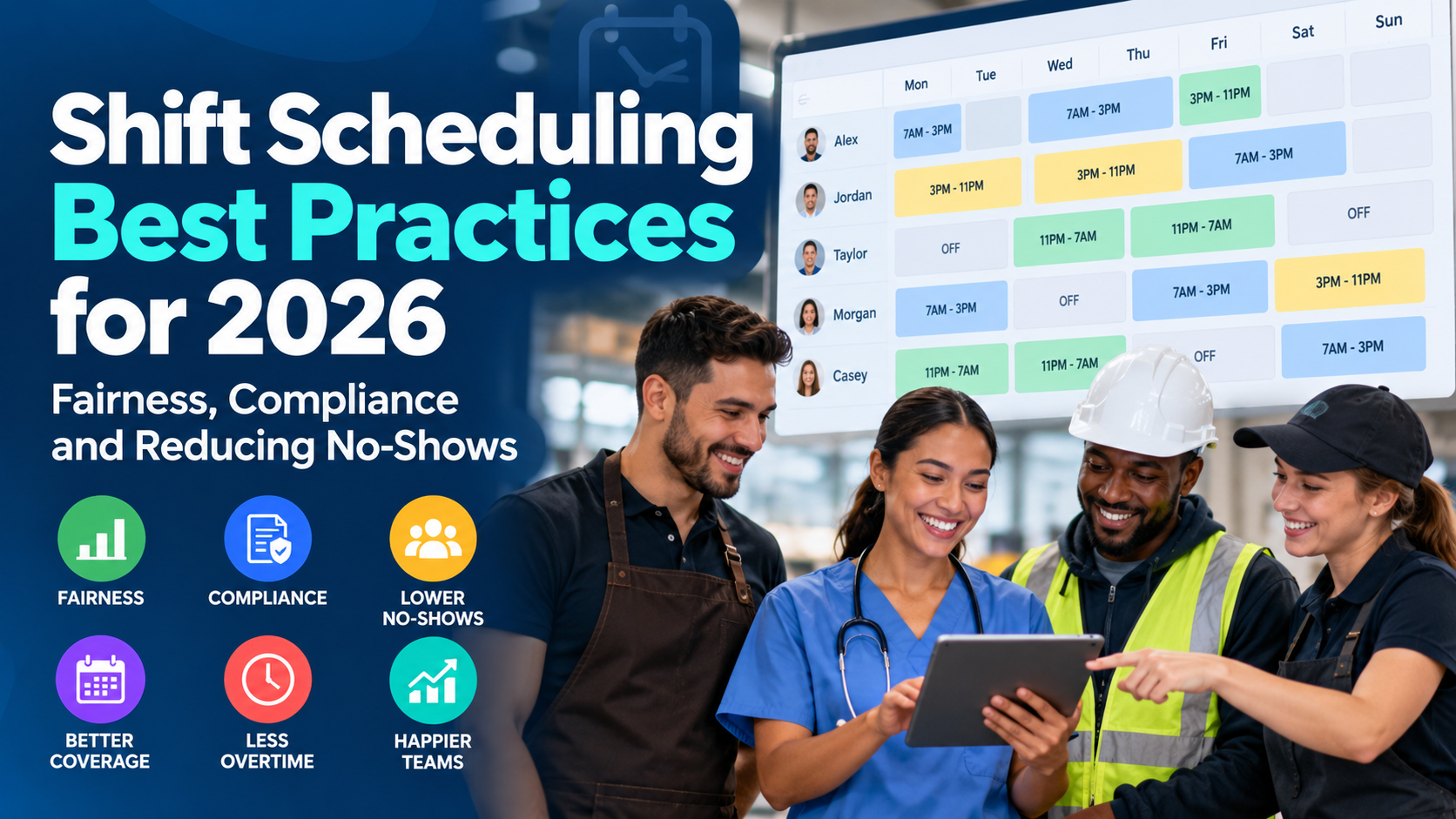
An employee opens their schedule on Monday morning and discovers that an AI system has moved three shifts. There is no explanation, no alternative to choose, and no clear person to contact.
If you run the five-dimension pulse, field it through an employee surveys hub so results can be segmented by site and role instead of sitting in a spreadsheet.
The schedule may be optimized. The employee has also been removed from the decision.
Human agency at work may become one of the most important, and most overlooked, measures of whether workplace AI is succeeding. It comes down to a simple question: can employees understand, influence, question, correct, and, when appropriate, override the automated systems that shape their daily work?
From AI-powered scheduling and personalized communications to automated task assignments, recommendations, and performance nudges, the answer will determine whether technology supports the workforce or quietly undermines it.
As organizations accelerate AI adoption, many are creating a new form of workforce experience debt. When employees feel managed by invisible and unaccountable systems, trust erodes, workarounds multiply, and the promised value of the technology becomes harder to realize.
This is not only an HR or employee-engagement issue. It is an operational risk.
The solution is to treat human agency not as a vague ideal, but as a measurable feature of workplace systems, one that sits at the intersection of technology, communication, AI governance, and frontline operations.
Key Takeaways
- Human agency at work is an employee’s practical ability to understand, influence, question, correct, and, when appropriate, override the systems that shape their work.
- AI adoption becomes harder when workers feel managed by opaque systems they cannot interrogate or influence.
- Agency does not mean employees can disregard every automated decision. It means they have a proportionate level of explanation, input, review, correction, and appeal.
- The proposed Human Agency Score measures five dimensions: Transparency, Choice, Control, Feedback, and Appeal Paths.
- The greater an AI decision’s effect on an employee’s time, income, opportunities, safety, or job security, the stronger the agency protections should be.
- Organizations can begin by auditing employee-facing AI, explaining automated decisions in plain language, and creating practical review and appeal mechanisms.
What Is Human Agency at Work?
Consider a delivery dispatcher who arrives Monday morning to find that an AI scheduler has quietly reshuffled every route overnight to optimize fuel costs. The system has ignored years of the dispatcher’s on-the-ground knowledge about traffic patterns, road closures, and customer relationships.
Or consider a call-center agent who is handed a rigid script by a recommendation engine that completely misses the customer’s actual problem.
These are the moments where human agency either exists or is quietly stripped away.
Human agency at work is not exactly the same as autonomy, empowerment, engagement, or governance. Those concepts overlap, but they describe different parts of the employee experience.
| Concept | What It Covers | How It Differs From Human Agency at Work |
|---|---|---|
| Human agency | An employee’s ability to understand, influence, question, correct, and, when appropriate, override the systems shaping their work | Focuses on the employee’s practical relationship with workplace systems and automated decisions |
| Autonomy | Freedom to decide how work is performed | Focuses on discretion within a role, not necessarily the ability to question or shape the systems governing it |
| Empowerment | Authority, resources, and confidence to act | Describes whether people feel and are enabled to take action, but may not address system transparency or recourse |
| Engagement | Emotional investment and connection to work | Measures sentiment and commitment; agency can influence engagement, but the two are not the same |
| Governance | Organizational rules, controls, responsibilities, and oversight | Operates at the structural level; agency is how employees experience those controls in daily work |
Agency does not require that every employee have final authority over every automated action.
In a hospital, warehouse, airline, or regulated workplace, certain decisions may need strict controls. Agency means that the level of explanation, input, correction, human review, and appeal is appropriate to the impact of the decision.
When AI-powered systems operate as black boxes, agency is often the first casualty.
This happens when:
- AI scheduling tools ignore employee availability, personal circumstances, tenure, or local knowledge.
- Recommendation engines replace professional judgment with blunt, one-size-fits-all prompts.
- Automated task assignments remove context and provide no practical route for review.
- Performance nudges monitor behavior without explaining why an employee received them.
- Personalized communications make decisions about people without allowing them to correct the underlying data.
- Employees cannot tell whether a decision was made by a manager, a rule, or an AI system.
Organizations that overlook agency may see disengagement and failed AI rollouts because employees stop trusting systems they cannot understand or influence.
Why AI Adoption Will Fail Without Human Agency
AI rollouts stall when workers feel managed by invisible systems rather than supported by them.
Employees may initially comply with an automated system, especially when they believe they have no alternative. But compliance is not the same as adoption.
When people do not trust the system, they begin to:
- Verify every recommendation manually
- Ignore or delay automated prompts
- Build unofficial workarounds
- Ask managers to reverse routine decisions
- Avoid providing useful feedback
- Withhold contextual knowledge from the system
- Return to older processes that feel more predictable
These behaviors reduce the efficiency the technology was meant to create.
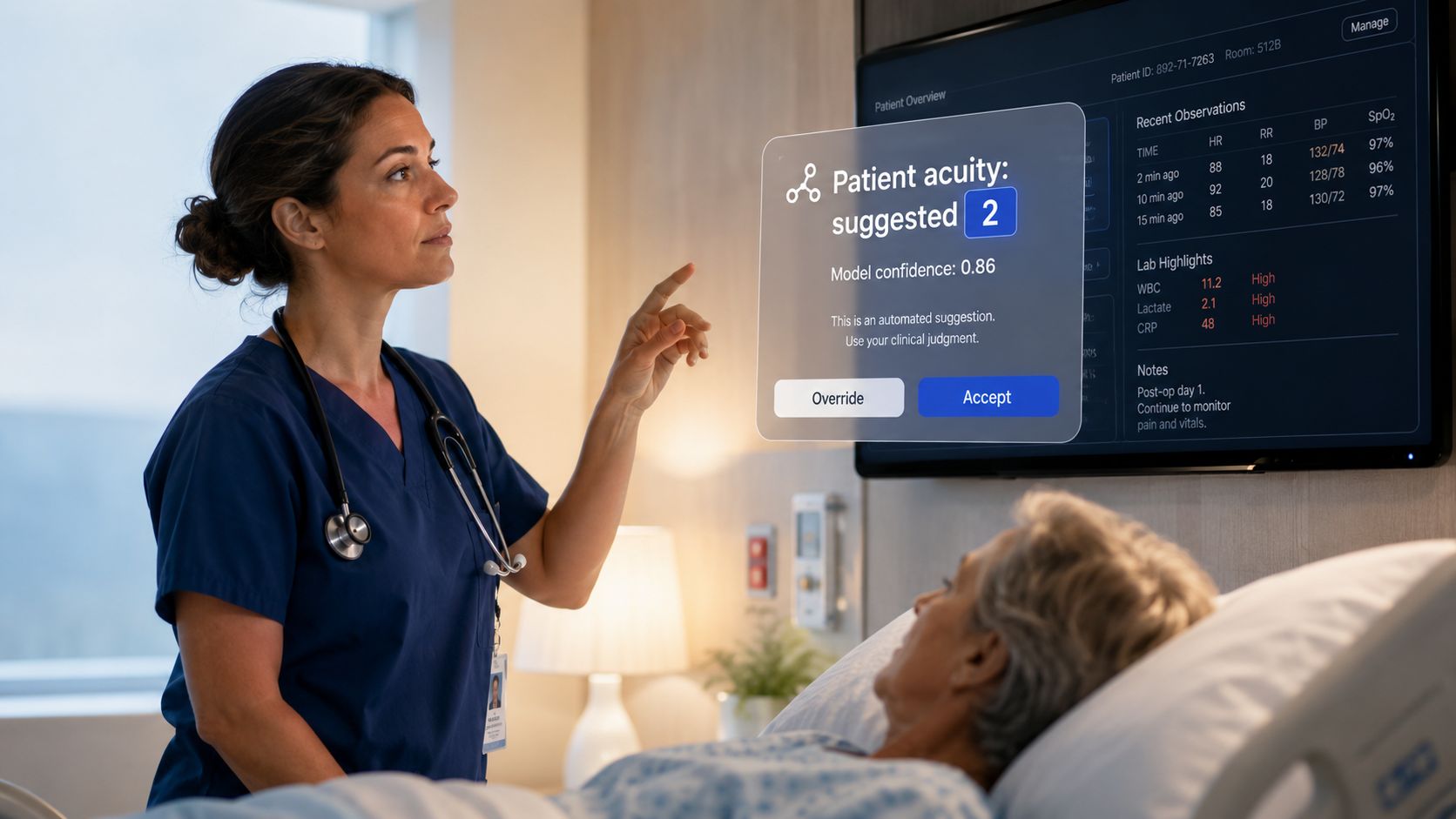
Consider a hospital that introduces an AI-powered patient-acuity tool. The tool is intended to help nurses prioritize care by analyzing real-time data.
If nurses can see the major factors behind the recommendation, add missing context, and request review when the score conflicts with clinical judgment, the tool can support better decisions.
If they cannot see the inputs, question the score, or override it in an urgent case, the system becomes a source of friction rather than support. Experienced nurses may revert to manual assessments, creating duplicate work and weakening confidence in the technology.
This is both an engagement problem and an operational one.
The effects may include:
- Lower productivity as verification steps and workarounds multiply
- Reduced engagement as employees lose a sense of authorship and control
- Lower-quality decisions when systems cannot capture local or professional knowledge
- Manager overload as supervisors become the default escalation path
- Ethical and compliance risk when decisions lack documented review or recourse
- Poorer AI performance because employees stop correcting errors or sharing useful context
The goal should be to build systems that augment human intelligence rather than silently replace human judgment.
Agency is not resistance to automation. It is one of the conditions that allows automation to work in the real world.
Why the Future of Work Changes the Agency Question
Organizations are entering a period in which employees may interact with automated systems more often than they interact with policy owners, schedulers, trainers, analysts, or support teams.
An AI system may recommend what task to complete next, when to work, what message to read, which customer to prioritize, what training to take, or how a manager should interpret performance.
That changes the psychological contract at work.
Employees will judge the organization not only by what leaders and managers say, but also by whether its systems:
- Explain themselves
- Use accurate information
- Accept correction
- Recognize exceptions
- Respect professional judgment
- Provide meaningful choices
- Offer human review when the stakes are high
An organization may describe its AI as an assistant. Employees may experience it as a manager.
That gap will become one of the defining workforce challenges of AI adoption.
The question is no longer simply whether a system is accurate on average. It is whether the people affected by it have a meaningful role when the system is wrong, incomplete, or inappropriate for the situation.
Where Human Agency Is Most at Risk
Human agency becomes especially important when AI influences decisions that materially affect employees.
AI scheduling
Scheduling systems may optimize labor demand, availability, skills, overtime, and cost. But they may not understand caregiving responsibilities, transportation limitations, local traffic, team dynamics, or the reason an employee has repeatedly requested a particular shift.
Agency-preserving scheduling should explain major changes, allow employees to express preferences, provide alternatives where possible, and offer a timely review path.
AI recommendations
Recommendation engines may suggest scripts, actions, candidates, learning content, or operational priorities.
Employees should be able to understand that the recommendation is not necessarily a command. They should be able to choose another option, add missing context, or explain why the suggestion does not fit.
Automated task assignments
Task-assignment systems may allocate work based on availability, skills, location, workload, or predicted efficiency.
Agency does not always require a one-click rejection button. It may require the ability to modify, pause, decline, or request review when the assignment is unsafe, inappropriate, or based on incomplete information.
Performance nudges
Automated nudges can help employees identify missed goals, compliance requirements, or opportunities to improve.
They can also feel like surveillance when employees do not know why they received them, what data was used, or whether the system understands the surrounding circumstances.
A useful nudge should be explainable, relevant, correctable, and connected to support, not simply pressure.
Personalized communications
AI can tailor messages by role, location, behavior, interests, or predicted needs.
That can improve relevance. It can also create discomfort when employees do not understand how they were categorized or cannot correct the data behind the communication.
The more personalized the message, the more important transparency and data correction become.
The Human Agency Score: A Framework for Measurement
To make human agency operational, organizations need a way to assess it.
The Human Agency Score is a proposed framework for measuring whether employees can meaningfully interact with the systems that shape their work.
It translates the experience of “being managed by a computer” into five dimensions:
- Transparency
- Choice
- Control
- Feedback
- Appeal Paths
The score is not presented as a validated scientific standard. It is a practical management framework that organizations can test, refine, and adapt to their workforce and risk profile.
A useful assessment should combine three forms of evidence:
- Employee experience: What affected employees say they can understand and do
- System design: What options, explanations, controls, and review paths the technology actually provides
- Operational evidence: What happens when employees flag errors, override recommendations, or file appeals
This prevents an organization from receiving a high score merely because a policy says employees have control when they cannot exercise it in practice.
The Five Dimensions of Human Agency
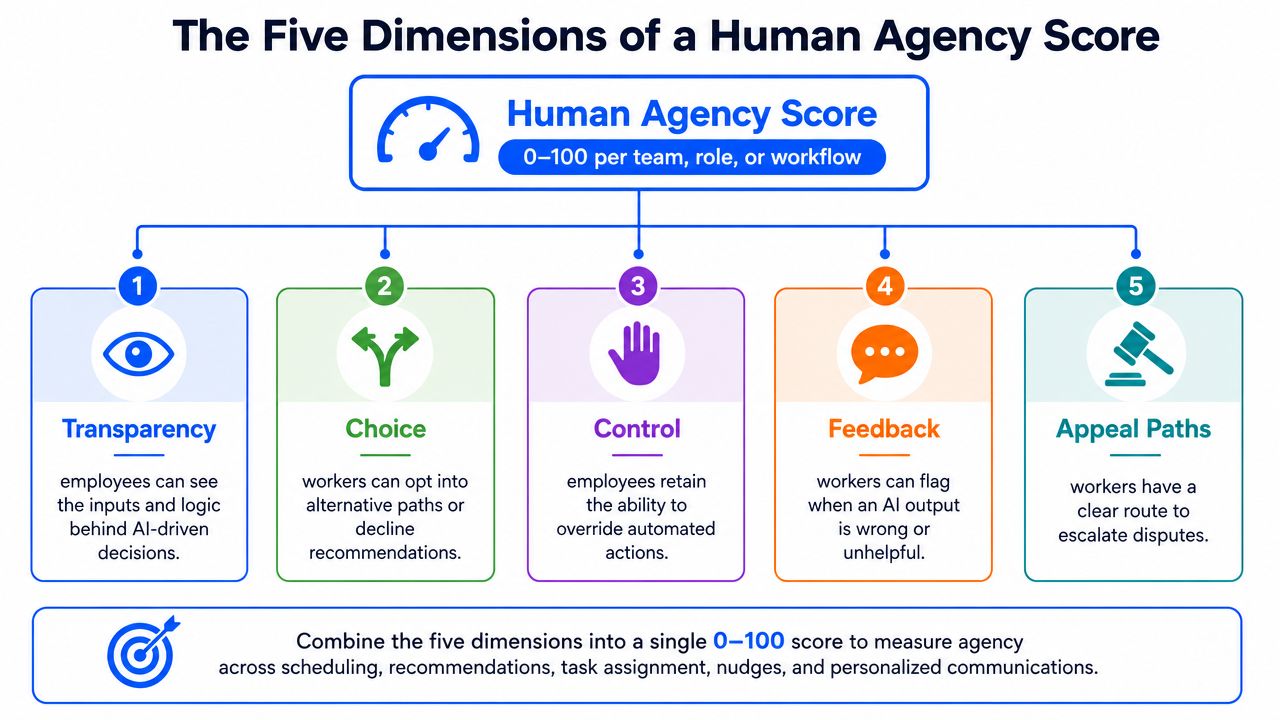
| Dimension | What It Means at Work | Typical AI System | Diagnostic Question |
|---|---|---|---|
| Transparency | Employees know when AI is involved, what information it uses, and the main reasons behind a recommendation or decision | AI scheduling | Can the employee easily see why this shift was assigned or changed? |
| Choice | Employees have meaningful options rather than being presented with one automated path | Recommendation engine | Can the employee select a different reasonable option when the first recommendation does not fit? |
| Control | Employees can add context, modify an output, pause an action, or request human review when appropriate | Automated task assignment | Can the employee challenge or adjust an assignment when important context is missing? |
| Feedback | Employees can easily report that the system is wrong, irrelevant, biased, or incomplete and see whether the issue was addressed | Performance nudges | Can the employee flag an incorrect nudge directly and learn what happened next? |
| Appeal Paths | Employees can formally contest decisions that have already affected their work, pay, opportunities, safety, or employment | Scheduling, performance, or personalized communications | Is there a clear and timely human-led process for reviewing a material automated decision? |
Transparency
Transparency does not require publishing source code or overwhelming employees with technical detail.
It means giving people enough information to understand:
- That AI or automation was involved
- What type of data influenced the result
- The main reasons for the decision
- Which policy or business rule applies
- Whether the output is a suggestion or a requirement
- Where to go for questions or review
A schedule change that simply says “optimized by the system” is not meaningful transparency.
A better explanation might say:
“Your shift was moved because customer demand is forecast to be higher at 11 a.m. and your role is needed during that period. You can review available alternatives or request a manager review here.”
Choice
Choice means employees have a meaningful option when more than one reasonable path exists.
That may include:
- Choosing from several recommended actions
- Expressing scheduling preferences
- Selecting alternative training
- Changing the communication channel
- Declining a nonessential recommendation
- Requesting another task that meets the same operational need
Choice should be genuine. Offering an alternative that creates punishment, delay, or manager disapproval may not represent meaningful agency.
Control
Control is the ability to act when the automated output does not fit reality.
Depending on the system and risk level, this may include:
- Adding missing information
- Correcting inaccurate data
- Modifying a recommendation
- Pausing an action
- Requesting human review
- Overriding the system in an authorized situation
- Documenting why a different decision was made
The goal is not to create a free-for-all. It is to capture human context and judgment that the automated system may not have.
Feedback
Feedback allows employees to improve the system before or after a decision.
A practical feedback mechanism should be:
- Easy to access
- Connected to the relevant output
- Specific enough to identify the problem
- Routed to an accountable owner
- Visible enough that the employee knows it was received
- Linked to a process for correction
Feedback is different from appeal.
Feedback says:
“This recommendation is irrelevant or based on incomplete information.”
An appeal says:
“This decision has affected my schedule, pay, performance, opportunity, safety, or employment, and I am formally contesting it.”
Appeal Paths
Appeal paths provide recourse after an automated decision has a material effect.
A credible appeal process should explain:
- What decisions can be appealed
- How to start the process
- Who reviews the case
- Whether the reviewer has authority to change the outcome
- What evidence the employee can provide
- How long the review should take
- How the final decision will be communicated
- Whether retaliation is prohibited
An appeal process that exists only in policy but is difficult to find or slow to use does not create meaningful agency.
How to Calculate the Human Agency Score
Each dimension can be scored from 0 to 20, creating a total score from 0 to 100.
A practical approach is to use four statements for each dimension. Employees rate each statement from 1 to 5:
- 1 - Strongly disagree
- 2 - Disagree
- 3 - Neither agree nor disagree
- 4 - Agree
- 5 - Strongly agree
The average response for the four statements is converted into a 20-point dimension score.
For example, the Transparency dimension might ask employees to rate:
- I know when an automated system influences a decision about my work.
- I can understand the main reasons behind the system’s recommendation or decision.
- I know what information the system used.
- I know where to ask questions about the result.
The employee survey should not be the only input.
A stronger score could combine:
- 40% employee survey results
- 40% system and process audit
- 20% operational evidence
Operational evidence might include:
- Time required to resolve appeals
- Percentage of feedback items reviewed
- Number of system errors corrected
- Employee awareness of review routes
- Frequency of manual workarounds
- Percentage of high-impact decisions receiving human review
- Rate of repeated complaints about the same system
These weights are a starting point, not a universal standard. Organizations should adjust them based on workforce context and decision risk.
Human Agency Should Increase With Decision Impact
Not every AI interaction requires the same level of employee control.
A recommendation about optional training is not equivalent to an automated decision affecting pay, scheduling, promotion, discipline, safety, or employment status.
A useful principle is:
The greater the effect on an employee’s time, income, opportunities, safety, or job security, the stronger the requirements for transparency, human review, correction, and appeal.
Organizations can group AI use cases into three levels.
Low impact
Examples:
- Recommended articles
- Optional training suggestions
- Communication personalization
- Routine reminders
Appropriate protections may include disclosure, basic explanation, easy feedback, and the ability to dismiss or change preferences.
Moderate impact
Examples:
- Task prioritization
- Shift recommendations
- Work allocation
- Performance coaching prompts
- Internal mobility suggestions
These systems may require clearer reasoning, meaningful alternatives, data correction, manager review, and documented overrides.
High impact
Examples:
- Pay decisions
- Final schedules with material consequences
- Performance ratings
- Promotion or hiring decisions
- Disciplinary action
- Safety-critical assignments
- Employment termination
These uses should have stronger documentation, human accountability, formal appeal, timely review, and clear limits on autonomous decision-making.
A system’s technical accuracy does not eliminate the need for recourse. High-impact decisions require stronger agency because the cost of error is greater.
Practical Steps to Build Human Agency
Improving human agency does not require organizations to halt AI development.
It requires a deliberate, cross-functional strategy that integrates agency-preserving principles into technology deployment, internal communications, and operations.
For HR and AI Governance Teams
Conduct agency audits
Before deploying employee-facing AI, assess the system across Transparency, Choice, Control, Feedback, and Appeal Paths.
The audit should include:
- Employees affected
- Decisions influenced
- Data used
- Potential errors
- Available alternatives
- Review responsibilities
- Impact level
- Escalation routes
Define whether AI advises or decides
Job descriptions, policies, manager guidance, and system interfaces should clearly distinguish between:
- Suggestions
- Recommendations
- Default actions
- Required rules
- Decisions requiring human approval
Employees should not have to guess whether they can question an output.
Establish clear appeal paths
Work with legal, operations, employee relations, and technology teams to create a formal process for disputing automated decisions that materially affect employees.
The process should be easy to find and use.
Audit the underlying data
Agency also depends on employees being able to correct inaccurate information.
Organizations should identify:
- Which employee data the system uses
- Where it came from
- Who can correct it
- How quickly corrections appear
- Whether inferred information is clearly labeled
- Whether employees can see relevant parts of their data profile
A transparent explanation built on inaccurate data is still a bad decision.
For Internal Communications Teams
Prioritize explainability
Automated notifications should include a plain-language explanation of why the decision or recommendation was made.
Instead of:
“Your shift has been changed.”
Use:
“Customer traffic is forecast to increase by approximately 30% during the late morning, and your role is needed during that period. Your shift has been moved to 11 a.m. You can review other available options or request a manager review here.”
Avoid false personalization
A message should not imply the organization understands an employee’s needs when it is based only on limited behavioral data.
Explain why the message was selected and allow employees to correct preferences where appropriate.
Close the feedback loop
When employees identify problems in an automated system, communicate what changed as a result.
This may include:
- Corrected rules
- Updated data
- New explanations
- Improved options
- Changes to the appeal process
- Cases where the system will no longer act automatically
Visible action shows that employee input can influence the system.
For Operations and Frontline Leaders
Build human-in-the-loop workflows
Critical processes should include checkpoints for human judgment and review.
The goal is not to slow every decision. It is to place human involvement where context, safety, ethics, or material consequences make it necessary.
Define override rules
Employees and managers should know:
- When an override is allowed
- Who can approve it
- How it is recorded
- Whether the process continues during review
- How override patterns are analyzed
- How repeated overrides improve the system
An override by an experienced delivery driver may reveal that a route model is missing local road conditions. That is not necessarily defiance. It may be valuable operational data.
Track agency alongside performance
The Human Agency Score can sit alongside measures such as productivity, quality, safety, adoption, and employee experience.
A decline in agency may be an early warning sign that employees are losing trust or building workarounds, even before performance visibly falls.
A Practical Human Agency Audit
Organizations can start with one high-impact AI system.
For example, choose an AI scheduler, task-routing system, performance tool, recommendation engine, or personalized communications platform.
Ask:
Transparency
- Do employees know AI is involved?
- Can they see the main reasons behind the output?
- Can they identify the data or rules used?
Choice
- Are alternatives available?
- Are employees penalized for choosing another reasonable option?
- Can they express preferences before the decision?
Control
- Can they add context or correct data?
- Can they modify or request review of the output?
- Are authorized overrides possible?
Feedback
- Can they report an error from the same interface?
- Does someone own the feedback?
- Can employees see whether the issue was addressed?
Appeal Paths
- Is there a formal human-led review process?
- Is it appropriate to the impact of the decision?
- Is there a defined resolution time?
- Can the reviewer change the outcome?
A five-question pulse survey can provide an initial employee baseline. But it should be paired with direct system testing and evidence from actual cases.
Common Mistakes to Avoid
- Treating transparency as a technical explanation. Employees need a useful reason, not a description of the model architecture.
- Offering choice that is not meaningful. An option is not meaningful if selecting it creates hidden penalties or requires excessive effort.
- Assuming managers can handle every appeal. If managers become the manual workaround for weak system design, the organization has not created scalable agency.
- Measuring policy instead of experience. A written override policy does not prove employees know about it or can use it successfully..
- Giving equal protections to every use case. Higher-impact decisions require stronger transparency, review, and appeal.
- Treating employee resistance as the problem. Resistance may be evidence that the system is wrong, intrusive, unclear, or operationally unrealistic.
- Collecting feedback without changing anything. A feedback channel without visible response may reduce trust rather than increase it.
Final Thoughts
The central question for the AI-driven workplace will not be whether organizations can automate more decisions.
It will be whether employees remain informed and influential participants in those decisions.
The organizations that preserve human agency will not be slowing AI down. They will be building the trust, feedback, and real-world intelligence required to make it work.
Employees often see the exceptions, missing context, and unintended consequences before the system designers do. When they can question and correct automated outputs, the organization gains a continuous source of operational learning.
When they cannot, the system may appear efficient while workarounds, mistrust, and hidden risk grow underneath it.
Human agency therefore belongs alongside productivity, quality, safety, adoption, and employee experience as a core measure of AI success.
The future of work should not be defined by employees being managed more precisely by invisible systems.
It should be defined by systems that are powerful enough to support people, and accountable enough to listen when people say they are wrong.
Human Agency at Work FAQs
What is human agency at work in one sentence?
Human agency at work is an employee’s practical ability to understand, influence, question, correct, and, when appropriate, override the systems that shape their daily work.
How does human agency differ from employee engagement?
Employee engagement measures how connected and committed an employee feels to work. Human agency measures the employee’s practical ability to interact with and influence the systems governing that work.
Agency can contribute to engagement, but they are not the same.
Why is human agency especially important for frontline workers?
Frontline roles in logistics, retail, healthcare, hospitality, and manufacturing are often heavily affected by automated scheduling, task assignment, monitoring, and performance systems.
These employees may also have less access to decision-makers and fewer opportunities to question the technology. Without agency, automated tools can erase valuable local knowledge and professional judgment.
How can an organization start measuring human agency without a large project?
Start with one high-impact AI system.
Use the five dimensions, Transparency, Choice, Control, Feedback, and Appeal Paths, to create a short employee survey and system audit. Review actual cases in which employees disagreed with, corrected, or appealed the system.
This provides a practical baseline.
Does more employee control create operational risk?
Unstructured control can create risk. Structured agency can reduce it.
Clear override rules, documented decisions, defined permissions, and formal appeal paths allow organizations to capture human judgment without creating inconsistency.
Does every automated decision need an appeal?
Not necessarily.
Low-impact recommendations may require only disclosure, choice, and easy feedback. Decisions affecting pay, schedules, performance, opportunity, safety, discipline, or employment should have stronger human review and appeal.
Who should own the Human Agency Score?
Ownership should be shared.
HR can lead the employee-experience and policy dimensions. IT and AI governance can assess system design and data. Operations can evaluate real-world workflows. Internal communications can improve explanations and feedback. Legal and employee relations may oversee high-impact appeal processes.
No single function can measure agency accurately in isolation.